Crumbling Mortar: How to Tell When Brick Needs Repointing
Mortar is designed to be the part that gives up first. The useful question is not whether yours is deteriorating, but how deep it has gone and whether it is time to act.
Mortar is supposed to fail before the brick does
Homeowners read a soft joint as a sign the house is coming apart. It usually is not. Mortar is the sacrificial component in a masonry wall, and it is meant to be softer than the units it bonds. When something has to give, the right thing to give is the joint, because a joint can be cut out and replaced. A spalled brick face cannot.
So the question is never whether your mortar is deteriorating. On any wall that has seen thirty Middle Tennessee winters, some of it is. The question is how far it has gone, how deep, and whether it is still doing its job. That is a diagnosis, and you can start it from the ground with a house key.
The ten second test that tells you most of it
Take a key, a flat screwdriver or an old nail and drag the tip firmly along a mortar joint. Do it in several places: a north wall, a south wall, low near the ground, and up under the eaves if you can reach safely.
Sound mortar resists. You scratch a light line into it and that is all. Mortar that is going will cut a groove, and mortar that is gone comes away as sand and dust under almost no pressure. Deterioration is nearly always patchy, because it follows water rather than age, so do not judge a house from one spot.
- Light scratch only, tip skids off: sound, leave it
- Tip cuts a groove and some grit comes loose: monitor and note where
- Mortar crumbles to sand under thumb pressure: repointing territory
- Screwdriver pushes past a quarter inch with no resistance: act on it
- Joint has receded behind the face of the brick: overdue
Want a price for your own wall?
Four quick questions and we come back with a written quote. Or call (772) 251-6654 if that is faster.
Request a quote
Four questions, about a minute. We'll call you back.
Read the ground before you read the wall
There is a second piece of evidence and most people walk over it. Look at the ground, the flower bed, the porch slab or the window sill directly below a suspect wall. Small piles of gray or tan sand mean the binder has broken down and the aggregate is washing out. Larger crumbs and chips mean it is further along than sand alone.
While you are down there, look for the cause. Nine times out of ten the bad section of wall sits under a leaking gutter joint, a downspout discharging at the foundation, a valley dumping onto brick, or a bed graded back toward the house. Repointing and leaving the water source alone buys time, not a fix.
How deep it goes decides what the job is
Surface erosion and structural loss look identical from ten feet away. The way to tell them apart is to rake one joint out in an inconspicuous spot and see what is behind it. A joint can be powder for a quarter inch and perfectly sound underneath. That is the common case and the good one.
The bad case is a joint that keeps going. When a chisel travels an inch and a half and still finds nothing solid, water has been running down the back of the wall rather than the front. On solid multi wythe brick, common around the Murfreesboro square, that can mean the collar joint between wythes is washing out, which is a structural conversation.
Repointing practice is to cut back roughly two to two and a half times the width of the joint, and generally at least three quarters of an inch, so new mortar has something to key into. A skim smeared over failed joints has no depth and no bond. It sheds within a few seasons and makes the real repair harder.
Freeze and thaw is what does the work here
This is where Middle Tennessee differs from warm climates in a way that matters. Our winters cross freezing repeatedly rather than staying there. December through February brings nights below freezing followed by days above, over and over.
Water sitting in a joint expands when it freezes, pushes the joint apart, thaws, lets more water in and freezes again. Every cycle widens the path. A hairline in October can be an open joint by March, and once a joint holds standing water the cycle accelerates. That is why deterioration here is not gradual. It sits quiet for years, then one wet cold winter moves it a long way.
Where it shows up first on a Rutherford County house
After enough walkarounds the same places keep coming up. Not because they were built worse, but because they stay wet longest.
Chimneys above the roofline lead by a wide margin. Exposed on four sides, no shelter, no heat behind them, and wind driven rain from every direction. Rental stock near MTSU is the other cluster, less from bad brick than from gutters nobody has cleaned in a decade.
- Chimney stacks above the roof, especially the crown and top courses
- The bottom two or three courses, where splash off a hard surface lands
- Under gutter joints, behind downspouts, and below roof valleys
- North and northwest elevations, which dry slowest
- Window sills, wherever water sheds onto brick instead of past it
- Steps, porch piers and garden walls that get wet on both faces
When to repoint, and when to leave it alone
Plenty of walls do not need work. If joints are weathered but still firm, the honest answer is to fix the drainage, take dated photographs and look again next spring. Mortar that receded an eighth of an inch and stopped is not an emergency, and anyone saying otherwise on a first visit is selling.
Act when the joint has lost enough depth to hold water rather than shed it, when soft mortar runs deeper than the face, or when brick faces next to failed joints start spalling. That last one matters most, because the problem has jumped from the replaceable part of the wall to the part that is not.
Then time it properly, because timing is part of the repair and not just the schedule. Fresh mortar is full of mix water, and that water has work to do before it is allowed to freeze. Around forty degrees the cement reaction slows to almost nothing, and a joint that freezes while it is still green never reaches the strength or the bond it was mixed for. It sets up looking finished. Three winters later it is sand again, in a wall somebody already paid to cut back once. So a mild week in December is not the window it looks like. Cold weather work is legitimate with heated materials and an enclosure over the wall, but that is a real line item rather than a formality. Spring and early autumn are the easy windows here.
Related questions
Can I just smear new mortar over the crumbling joints myself?
It will not hold. Fresh mortar needs a joint cut back to sound material, roughly two to two and a half times the joint width, so it has depth to bond into. Over failed mortar it has nothing to grip and typically sheds within a couple of seasons. It also makes the proper repair more expensive later.
How long should repointing last?
Done properly, with mortar matched to the masonry and the water source corrected, several decades is reasonable. Done on a wall still being soaked by a bad gutter, it can start going again within a few winters. The mortar rarely decides the answer. The water does.
Does the whole house need repointing if one wall is bad?
Usually not. Deterioration follows water exposure, so a north elevation or a chimney can be far gone while the rest is sound. What the wall is built as changes the scope, though. On the veneer in the newer subdivisions the bad spots stay local, under a gutter or in the bottom courses, and a mason can price those areas alone. On the solid walls near the square in downtown Murfreesboro an exposed elevation tends to weather as a whole, so the scope there is genuinely larger. Either way, be cautious of anyone quoting the whole house without testing it.
Will the new mortar match my existing joints?
A real match takes deliberate work on color, sand, joint profile and tooling, and even a good one looks new until it weathers in. On older soft brick the match has to be right in strength too, because mortar harder than the brick will break the brick. Ask for a test patch. In the Smyrna and La Vergne subdivisions that have an architectural committee, that patch is also what you take to them, since a color change across a street elevation is exactly what they want to approve before it covers a whole wall.
Is powdery mortar dangerous, or can it wait?
Surface powder on joints still firm underneath can generally be monitored. What should not wait is mortar that has lost real depth, joints receded behind the brick face, or a wall also showing movement or spalling brick. Depth decides it, not appearance. On a rental near MTSU in Murfreesboro the calendar decides the rest, because the only easy window to have a crew on the building is the turn between tenants in summer. A joint found there in October either gets booked for that window or waits most of a year.
Why is my chimney so much worse than the rest of the house?
It is the most exposed masonry you own. Wind driven rain hits it from all sides, no adjoining walls shelter it, and it stays wet through freeze and thaw longer than anything at ground level. Chimneys commonly need attention a decade or more before the walls below them do.
More guides
All guides →White Residue on Brick: Reading Efflorescence Before You Scrub It
Efflorescence is not a stain sitting on your brick. It came out of the wall, dissolved in water, and the pattern it leaves is a map of where that water is getting in.
ReadFoundation Repair Cost in Middle Tennessee: How the Number Gets Built
Block repair, carbon fiber, piers and underpinning all get sold as foundation repair, and they are not the same work. What moves the price in Rutherford County, and where a mason stops and an engineer starts.
ReadFreeze-Thaw: Why Middle Tennessee Brick Breaks Down
It is not the cold that breaks brick. It is water in the brick, crossing freezing over and over, which is exactly what a Middle Tennessee winter delivers.
Read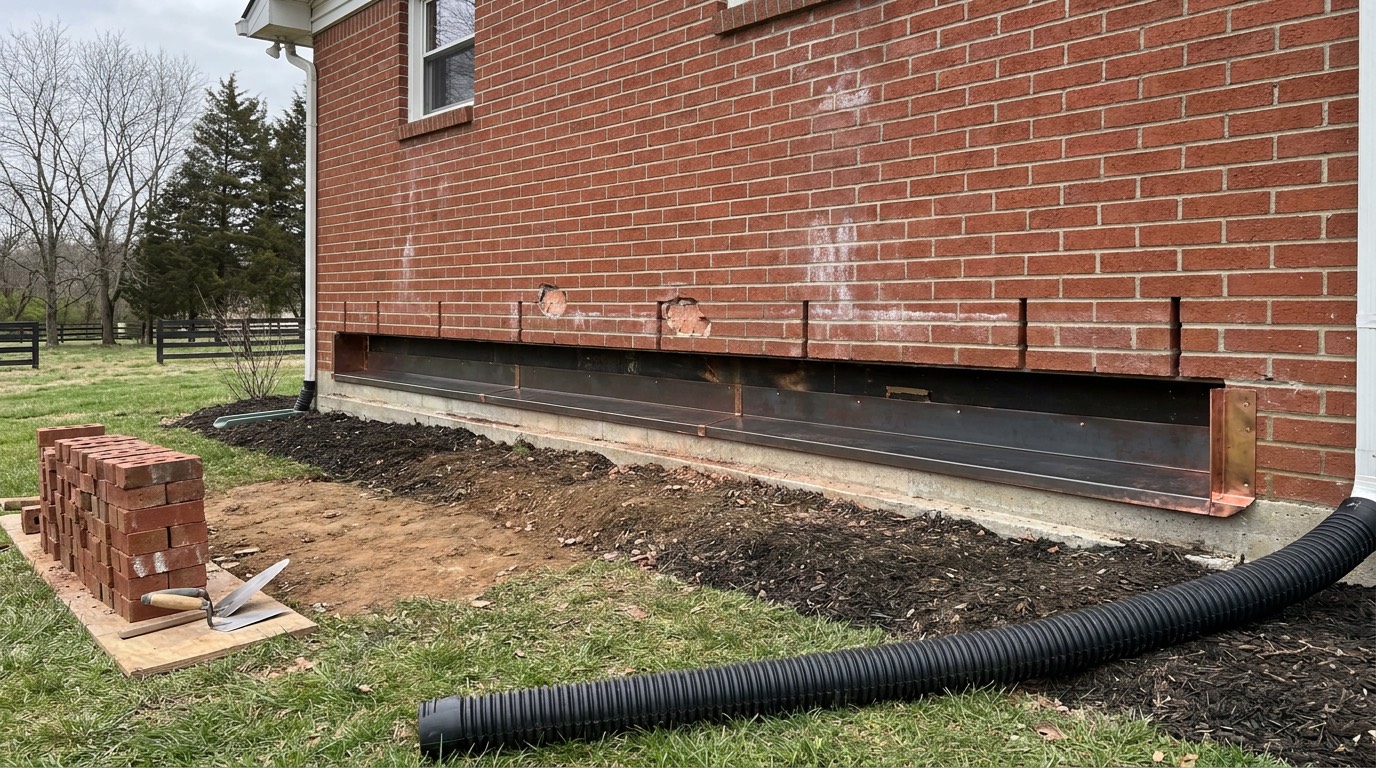 Maintenance
Gutters and Drainage: The Damage Nobody Blames on Water
Most of the brick damage we get called out to look at in Rutherford County traces back to a gutter or a downspout. Drainage is the cheapest masonry maintenance there is, and the most commonly skipped.
Read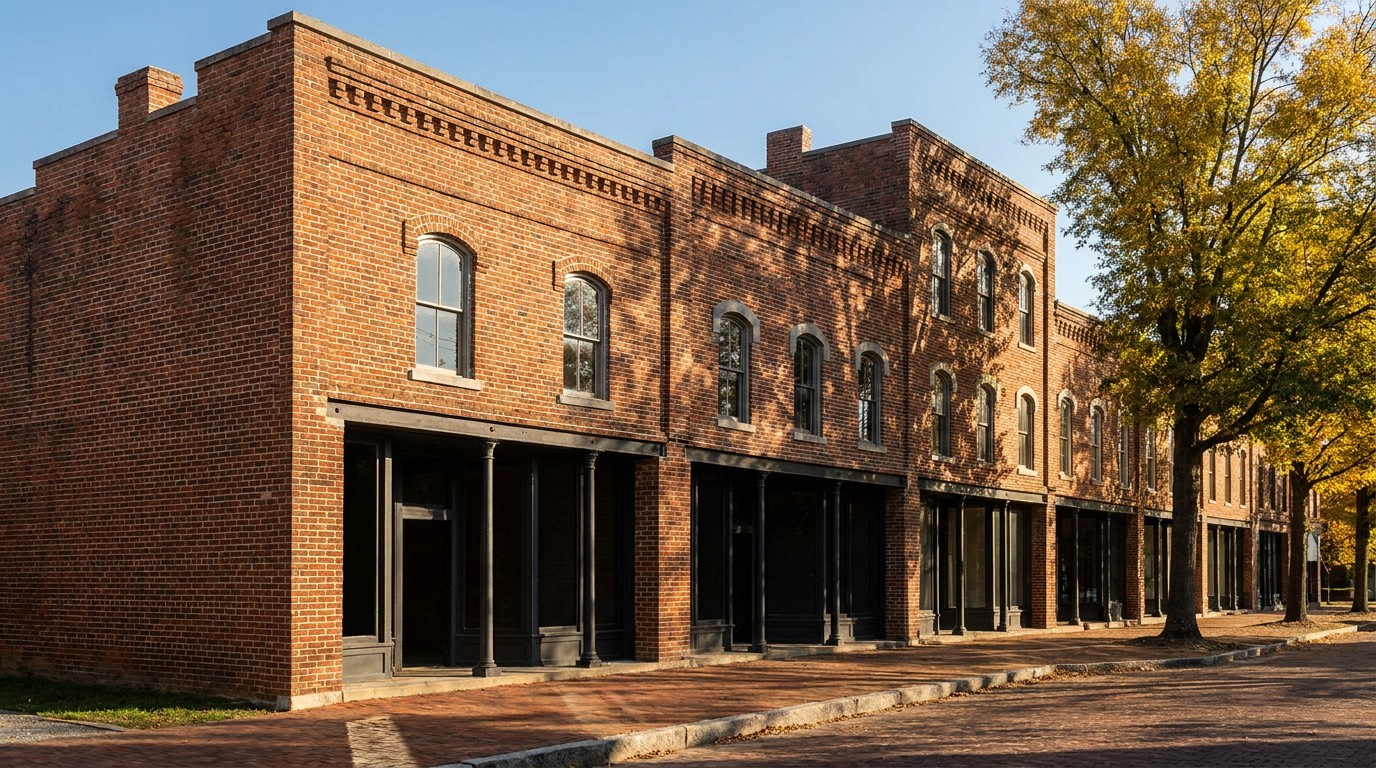 Local guide
Historic Brick Around the Murfreesboro Square: What It Needs
The brick downtown was made in a different century by a different process. Treat it like modern brick and you will watch the faces come off within a few winters.
ReadStraight answer on your wall.
Call, or send the form and we will get you a written price.