Gutters and Drainage: The Damage Nobody Blames on Water
Most of the brick damage we get called out to look at in Rutherford County traces back to a gutter or a downspout. Drainage is the cheapest masonry maintenance there is, and the most commonly skipped.
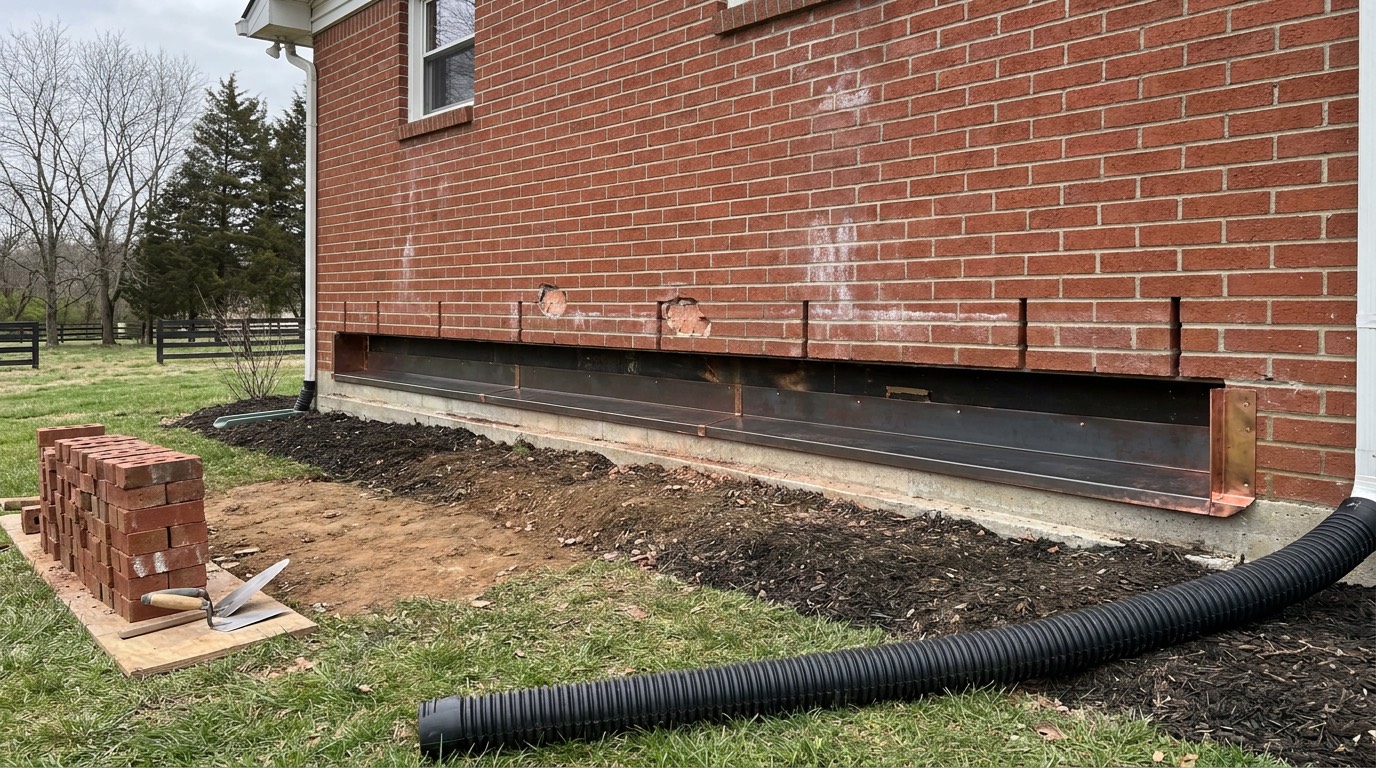
The first thing a mason looks at is not the brick
When we get called out to a damaged brick wall in Murfreesboro, we step back and look up. Not at the brick. At the gutter above it. Most of the time the bad section of wall lines up with a seam, a corner, or a clog in the gutter run directly overhead.
Masonry is not waterproof and was never meant to be. Brick and mortar take on water, hold it a while, and give it back. That works fine under normal weather. It stops working when one part of a wall gets soaked over and over by water that a gutter was supposed to carry somewhere else.
Drainage is the cheapest masonry maintenance available to a homeowner. Neglected drainage is the most common preventable reason we end up writing a repair quote.
What an overflowing gutter does to a wall
A clogged gutter does not drip. It sheets. Water backs up behind the leaf pack, rolls over the front lip, and runs down the face of the wall in a curtain, in the same spot every single time it rains.
That does three things at once. It holds the brick and the mortar wet far longer than weather alone would. It washes dirt and organic material down the face, which feeds algae and moss that hold still more moisture. And it pushes water into every open joint and hairline crack it passes on the way down.
What homeowners actually notice comes later. A damp spot on an interior wall base. Efflorescence, the chalky white bloom on the brick face. Mortar gone soft enough to scrape out with a house key.
Want a price for your own wall?
Four quick questions and we come back with a written quote. Or call (772) 251-6654 if that is faster.
Request a quote
Four questions, about a minute. We'll call you back.
Downspouts that unload at the footing
The second failure is simpler. Gutter works. Downspout works. Then the water reaches the bottom, exits the elbow, and dumps at the base of the wall. A single heavy Middle Tennessee spring storm moves a lot of water off a roof, and all of it lands in the same square yard of dirt.
That soaks the ground against the footing. Rutherford County clay swells when it is wet and shrinks back in the next dry stretch. Run that cycle under one corner of a house for a few years and the corner moves. Footing movement is what puts stair step cracks through brick.
- Discharge water well away from the wall, not at the corner of it
- A splash block moves water two feet. A buried line moves it properly.
- Buried lines fail quietly. Crushed or root filled, they put the water right back at the footing.
- Grade should fall away from the house on every side
- Mulch and beds piled above the bottom course hold water against the brick
Why this is a Tennessee problem, not a general one
A chronically wet wall in a warm climate is a nuisance. A chronically wet wall here is a countdown.
From December through February we drop below freezing regularly, and we cross that line back and forth constantly. Water sitting inside a brick face or a mortar joint expands when it freezes. It has nowhere to go, so it pushes. Thaw, absorb, freeze, push, thirty or forty times over one winter.
Eventually the hard fired face of the brick pops off. That is spalling, and it is the signature masonry failure in Middle Tennessee. Once the face is gone the soft interior is exposed, it absorbs faster, and the next winter does more damage than the one before. The brick that spalls first is almost always the brick that went into winter wettest, and that brick is usually under a bad gutter.
The spots that take the worst of it
Exposure is not even across a house. Some places collect water by design and stay wet by geometry, and those are where drainage neglect shows up first.
- Inside corners where two rooflines meet and two gutter runs converge
- North facing walls, which get less sun and dry slowest all winter
- Chimneys, which take weather on five sides and sit above the gutter line entirely
- The bottom three or four courses of any wall, where splash and grade meet
- Retaining walls and garden walls with no cap, which take water straight down into the core
- Under valleys, where a roof concentrates a lot of area into one narrow path
What you can check from the ground once a year
You do not need a ladder to catch most of this. Pick a heavy rain and walk the outside of the house with an umbrella. Water tells on itself while it is moving.
Look for water coming over the front of a gutter instead of out the downspout. Look for a stain or a clean streak down the brick face. Look at where each downspout ends and follow the water from there. Then walk the same route on a dry day and look at the bottom courses for white bloom, crumbling joints, and brick faces that have started to flake.
What fixing the drainage does and does not fix
Correcting gutters and downspouts stops the cause. It does not undo the effect. Brick that has already spalled does not grow its face back, and joints that have washed out have to be raked and repointed by hand.
The honest split is this. If the mortar is sound and you are seeing staining and efflorescence, fix the water and monitor the wall for a season. If joints are open more than a quarter inch or brick faces are flaking, the water fix is step one and the masonry repair is step two, in that order. Repointing under a gutter that still overflows is money spent twice.
Cost depends entirely on how much wall is involved, whether we can reach it from a ladder or need scaffold, and how hard the existing brick is to match. A small accessible area of repointing sits at the low end. Anything two stories up, or anything requiring replacement brick matched to a fifty year old blend, moves up quickly. Only a look at the actual wall produces a real number.
Related questions
How often should gutters be cleaned to protect the masonry?
Twice a year is the working baseline in Middle Tennessee, once after leaf drop in late fall and once in spring. Houses with mature oaks or maples close by often need more than that. The fall cleaning matters most, because a gutter that overflows all winter is soaking the wall during the exact months freeze-thaw is doing its damage.
Can I seal the brick where the water runs down it?
That usually makes things worse. A film forming sealer traps moisture that is already in the wall and gives it no way out, and around here trapped moisture freezes. If a coating is right for a specific wall it needs to be a breathable one, and it is never a substitute for fixing the water source above it.
My downspout goes into a buried pipe. Is that good enough?
Only if the pipe still works. Buried lines get crushed by vehicles, silted up and rooted into, and none of that is visible from the surface. Find the outlet end and confirm water actually leaves it during a rain. On the bigger rural lots around Tullahoma these runs are long, they daylight somewhere out in a pasture, and often nobody has walked to the end in years. If nothing comes out, that water is going into the ground beside your foundation, and with limestone fractured and shallow here it can travel further than you would guess.
The mortar is crumbling under one gutter but the rest of the wall is fine. Do I repoint everything?
No. Repointing is priced and performed by the joint, so a mason should be able to address the affected area and feather into sound work. What matters is that the gutter gets fixed first. New mortar under a gutter that still overflows will look no better than the old mortar in a few winters.
Do gutter guards solve this?
They cut down on cleaning. They do not end it. Fine debris and shingle grit still collect under most designs, and some styles shed water straight over the front edge when rain comes down hard. Leaf drop is the other catch. Oaks around Murfreesboro hang on well into December, so a guard cleared in October can be loaded again before the first hard freeze. Treat a guard as a reason to clean less often, not a reason to stop looking under it.
Is drainage damage covered by homeowners insurance?
Gradual damage from poor maintenance is generally treated differently than sudden damage from an event, and every policy is written differently. Ask your carrier directly rather than assuming either way. What helps in any conversation is a dated photo record showing the condition of the wall over time.
More guides
All guides → Local guide
Historic Brick Around the Murfreesboro Square: What It Needs
The brick downtown was made in a different century by a different process. Treat it like modern brick and you will watch the faces come off within a few winters.
Read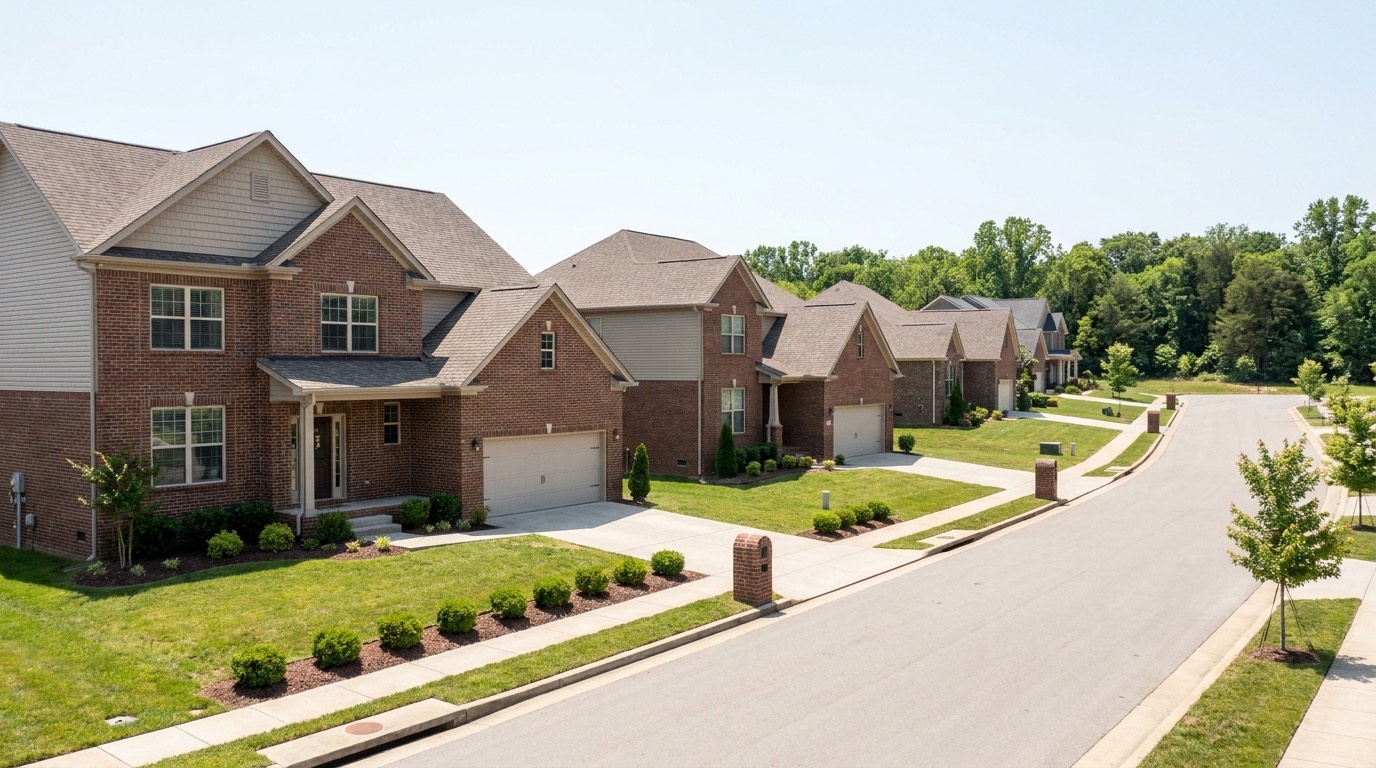 Local guide
HOA Rules and Brick Repair in Middle Tennessee
In most Middle Tennessee subdivisions the brick on your house is governed by covenants. Here is what architectural review usually wants, and why matching brick is the hard part.
Read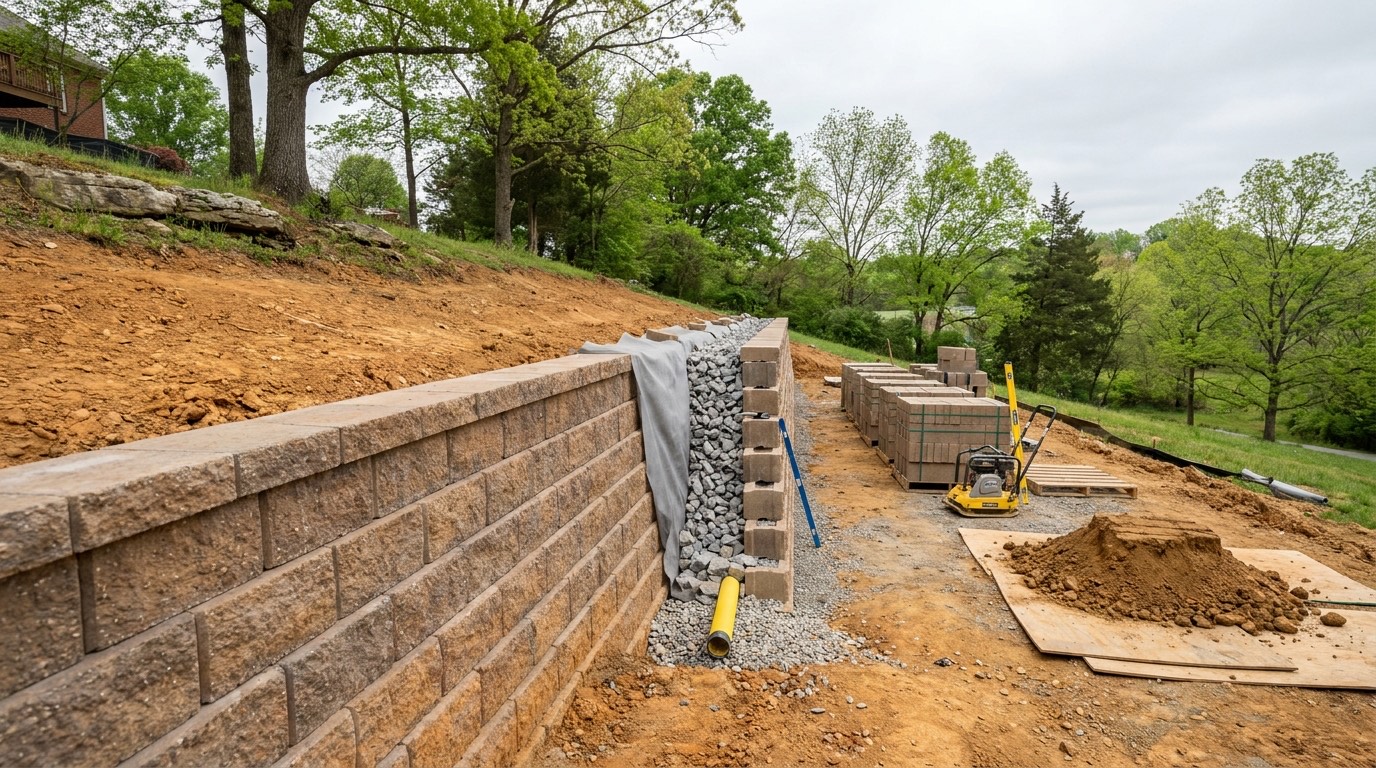 How it works
How a Retaining Wall Drains, and Why That Decides Everything
Retaining walls rarely fail because the blocks were weak. They fail because water got into the backfill and had nowhere to go. The drainage is the wall.
Read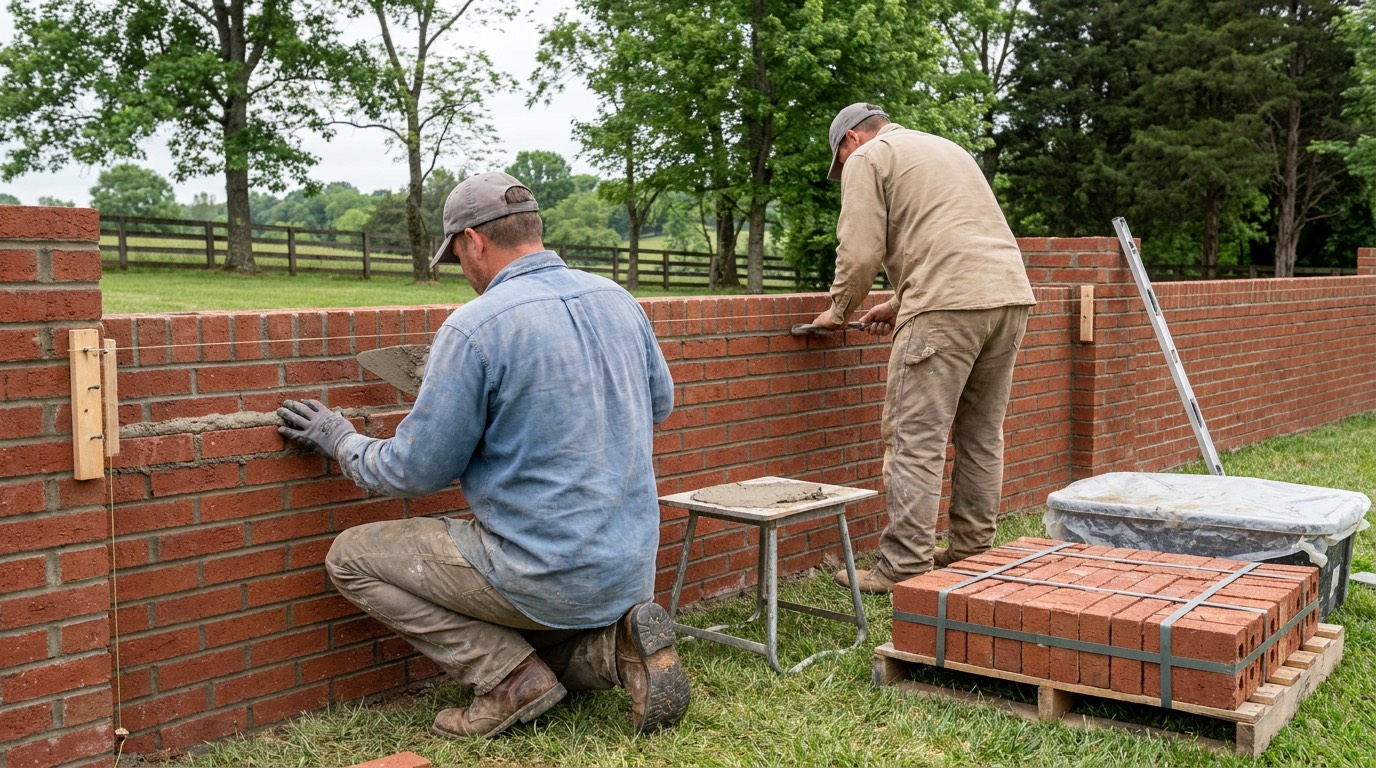 Hiring
How to Hire a Mason in Tennessee: What to Verify First
Masonry mistakes are permanent and expensive to undo. These are the things worth confirming before work starts, in the order a homeowner can actually do them.
ReadHow Tuckpointing Works, Step by Step
Good joint work is mostly removal. Here is what happens between the grinder and the finished joint, and why a skim of fresh mortar over failed joints never lasts.
ReadStraight answer on your wall.
Call, or send the form and we will get you a written price.