Masonry Work in Lebanon and Wilson County, Tennessee
We run north on 231 into Wilson County regularly. Lebanon work has an older, more rural character than anything in our home market. A lot of it is stone rather than brick, and a fair share of it is not on the house at all.
Request a quote
Four questions, about a minute. We'll call you back.
An Old County Seat With New Subdivisions Around It
Lebanon has a proper square and streets of nineteenth and early twentieth century buildings running off it. Around that sit ranch houses from the fifties through the seventies, and beyond those, farmhouses on acreage that stood there long before anyone thought of Wilson County as commuting distance to Nashville. New subdivisions have since filled the gaps.
Our Lebanon calls come overwhelmingly from the older end of that range. People buy a place with land, look under the house for the first time, and find stone piers doing a job they were never sure about. Or a family has been in the same farmhouse for decades and the chimney has reached the point where something has to happen. Old rural masonry was built with what was available, by hands not following a spec, and the only way to know what you have is to get under it and look.
- Dry laid and mortared limestone foundation walls and piers
- Chimney stacks that have settled or rotated at the base
- Old lime bedded brick with joints washed back deep
- Cellar, spring house and well house walls losing material
- Block walls on shops, garages and barns cracked at the corners
Thin Soil Sitting Directly on Flat Rock
Wilson County is cedar glade country. In a lot of places the topsoil is only a few inches deep and there is solid, nearly level limestone right underneath it. It makes for the scenery this county is known for. It also changes how anything gets built.
Two consequences show up on nearly every job. First, footings hit rock almost immediately, so digging to a depth does not apply. The answer is to prepare and key into the rock rather than bed a footing on loose fill sitting on top of it. Second, water does not soak away. It runs across the rock just below the surface, so after a wet week water is moving sideways through the top few inches of ground toward whatever is downhill.
That is why so much old masonry out here is soft at the bottom. The wall has stood in moving surface water for a century. Repointing the base without dealing with where the water crosses is a repair with a short life, and we will tell you which of the two problems is actually yours.
Stone Foundations, Piers and What Holds a Chimney Up
Old Lebanon farmhouses commonly sit on limestone piers or a stone perimeter wall, laid dry or with a lime mortar that has long since gone to sand. Stones work loose, piers lean, and the sills above start to sag. Homeowners usually notice inside first, as a floor that slopes or a door that will not latch.
This is repairable work and it is not glamorous. Support the load, take the pier or wall section apart, rebuild it plumb on a base that will not move, and repoint the surrounding stone. Done right it does not need doing again in your lifetime. Shimmed and walked away from, you are looking at it again in two years.
The same applies to chimneys, and out here the base is where we look first. A big exterior stack is a great deal of weight sitting on a footing that may never have been much more than a well chosen flat rock. If the base has settled, the stack rotates away from the house and you get a gap at the top that people mistake for a roof problem. Fixing the top of a chimney that is moving at the bottom is money thrown away.
Outbuildings Are Half of What We Do Out Here
Wilson County properties come with buildings. Smokehouses, spring houses, well houses, root cellars, detached shops, equipment sheds and hay barns on masonry piers. Some are still working buildings. Some are the reason somebody bought the place.
The masonry problems are different from a house. Nobody heats these, so the walls sit at outdoor temperature and cycle through every freeze all winter. Most were built on grade with no drainage. Many have had a metal roof added that now throws water off one edge in a sheet. Spring houses were deliberately built on running water, which is the condition that eventually takes the mortar out of them.
So we scope them honestly. A shop wall that has to be sound is one job. A stone spring house you want stabilized is another, and usually cheaper than people expect.
- Stabilizing old stone walls rather than rebuilding them where possible
- Rebuilding piers and knee walls under barns and equipment sheds
- Repairing block shop and garage walls cracked at openings and corners
- Resetting dry laid limestone walls and old fence row stone
- Grading and roof runoff corrected so the repair is not repeating
Working on Acreage and Getting a Price
Properties out on land come with practical questions we settle at the estimate. Whether a loaded truck can reach the structure without tearing up a field. Whether there is water and power at the building. Whether the drive holds up after rain. None of that is a problem. It just has to be known in advance.
You get a written scope separating what has to be done from what can wait a season. Stone and repointing work is priced by area and by how much has to be taken apart, with access and the difficulty of matching old material as the drivers. Only a site visit produces a real number. We have no yard in Wilson County, but travel is included and we are up that way often. If you have several small items, say so and we will group them into one trip.
Services in Lebanon
All services →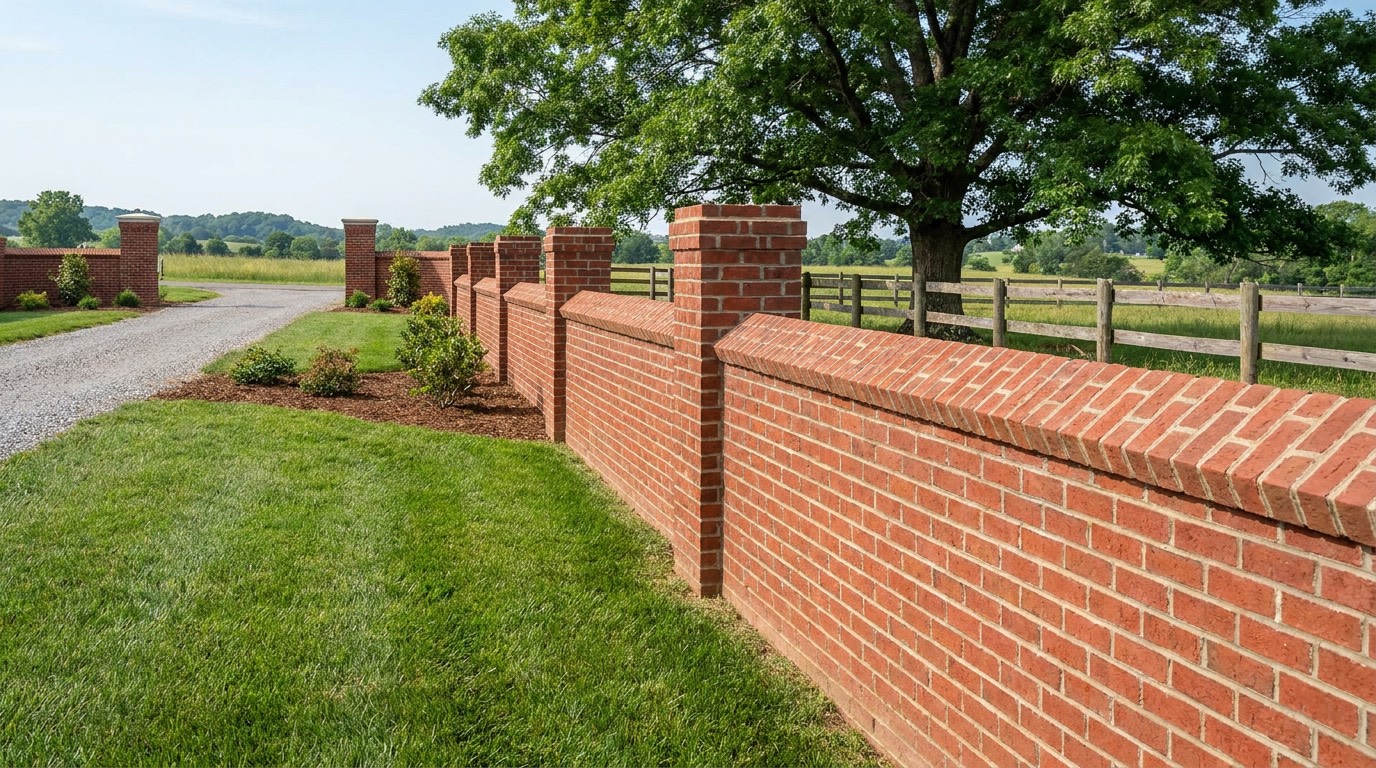
Brick Masonry
New brickwork, walls, columns and steps
Learn more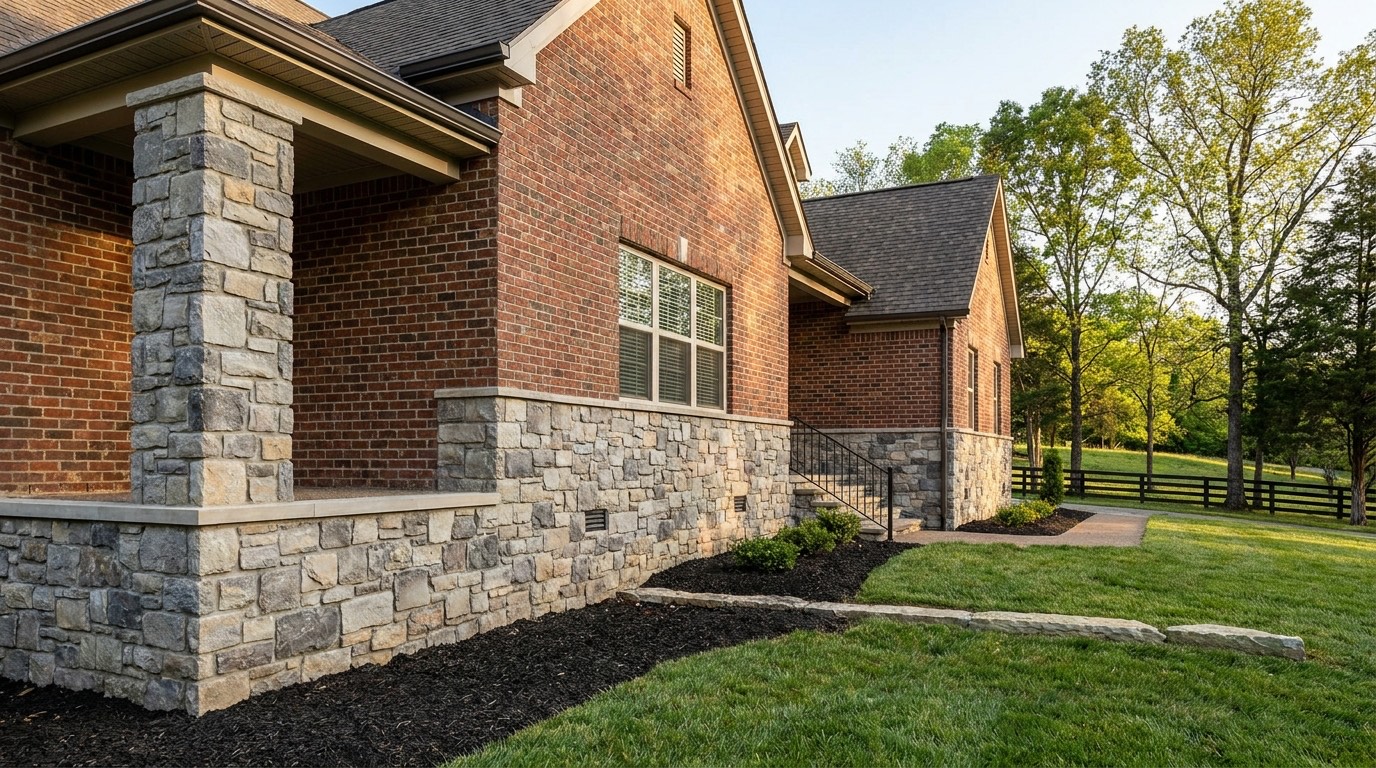
Stone Masonry
Natural and manufactured stone installation
Learn more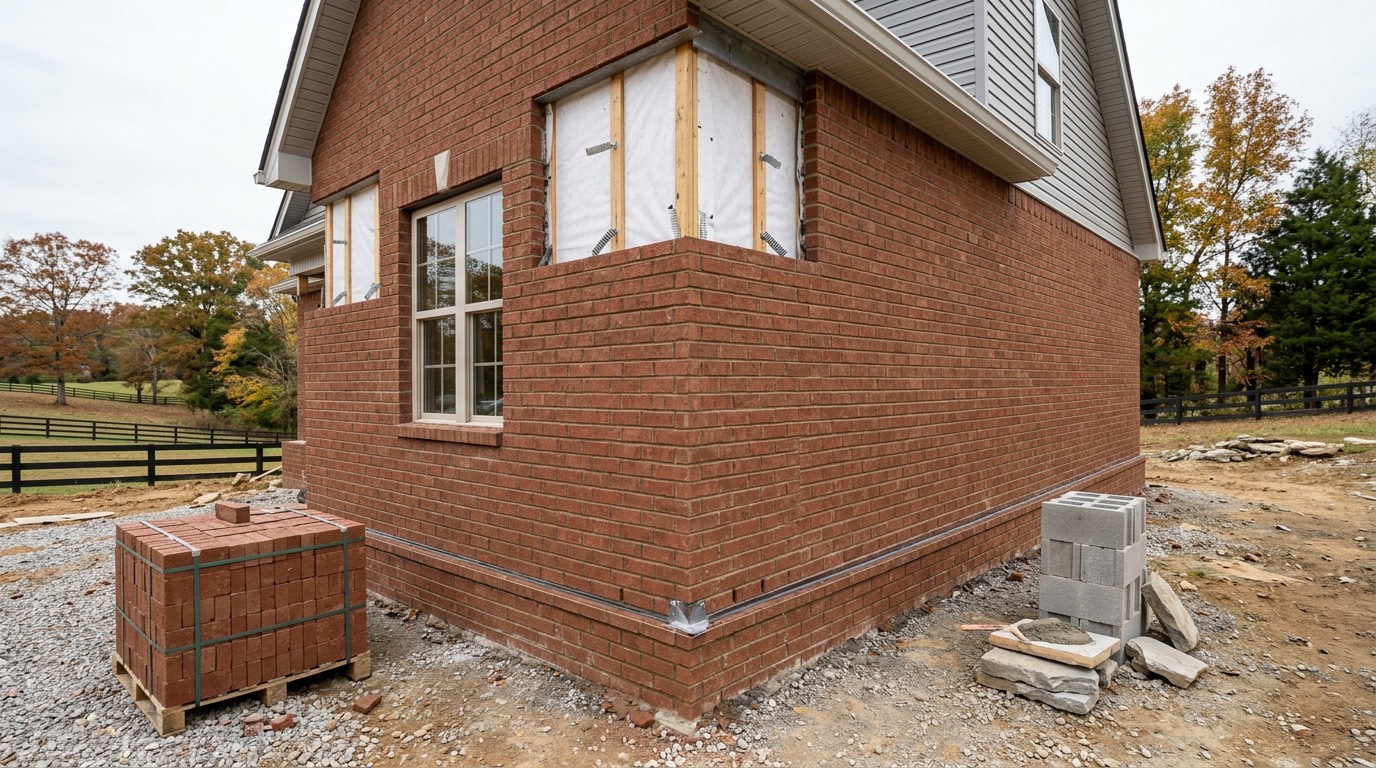
Brick Veneer Installation
Veneer over frame or block walls
Learn more
Tuckpointing and Repointing
Replacing failed mortar joints
Learn more
Masonry Repair and Restoration
Cracks, settlement and rebuilds
Learn more
Chimney Masonry Repair
Crowns, flashing, rebuilds and relining
Learn more
Brick Fireplaces
Indoor and outdoor fireplace masonry
Learn more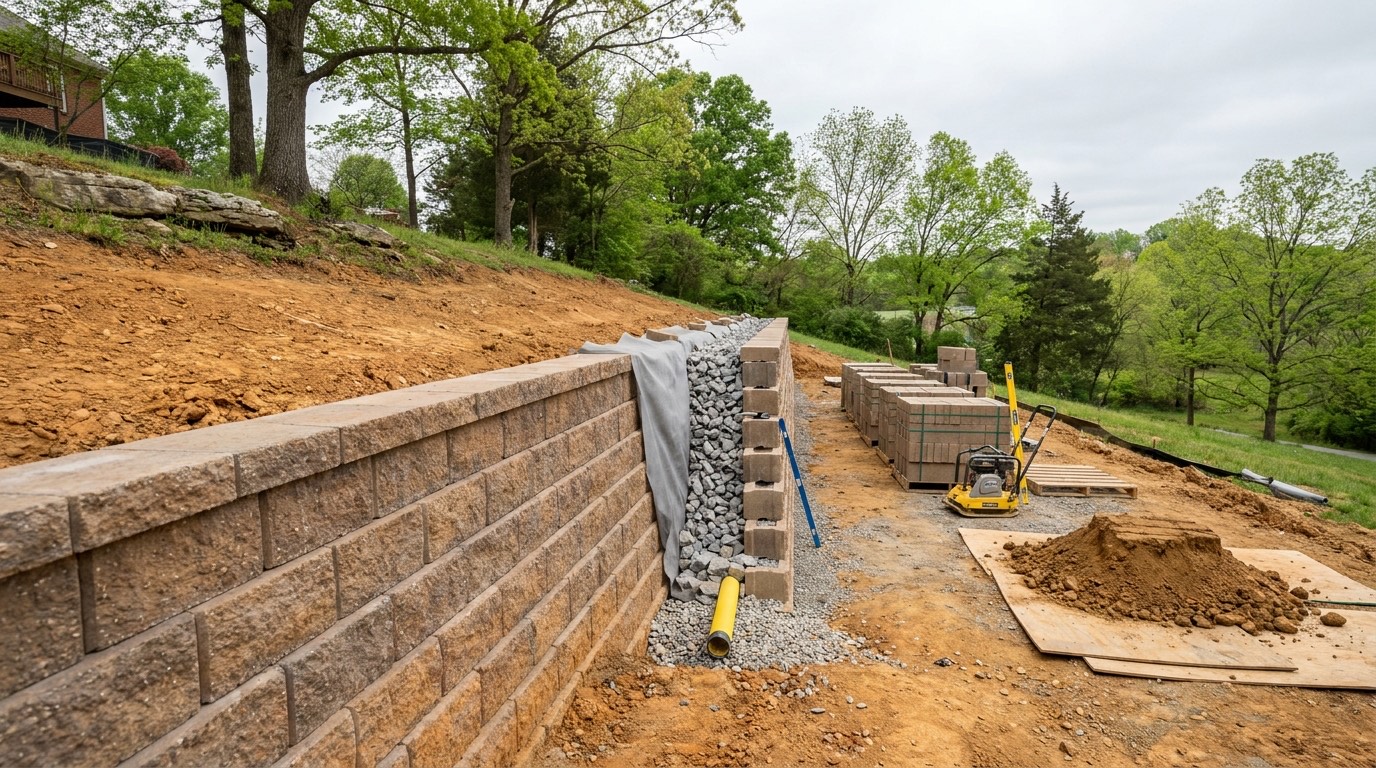
Retaining Walls
Block, brick and stone retaining walls
Learn more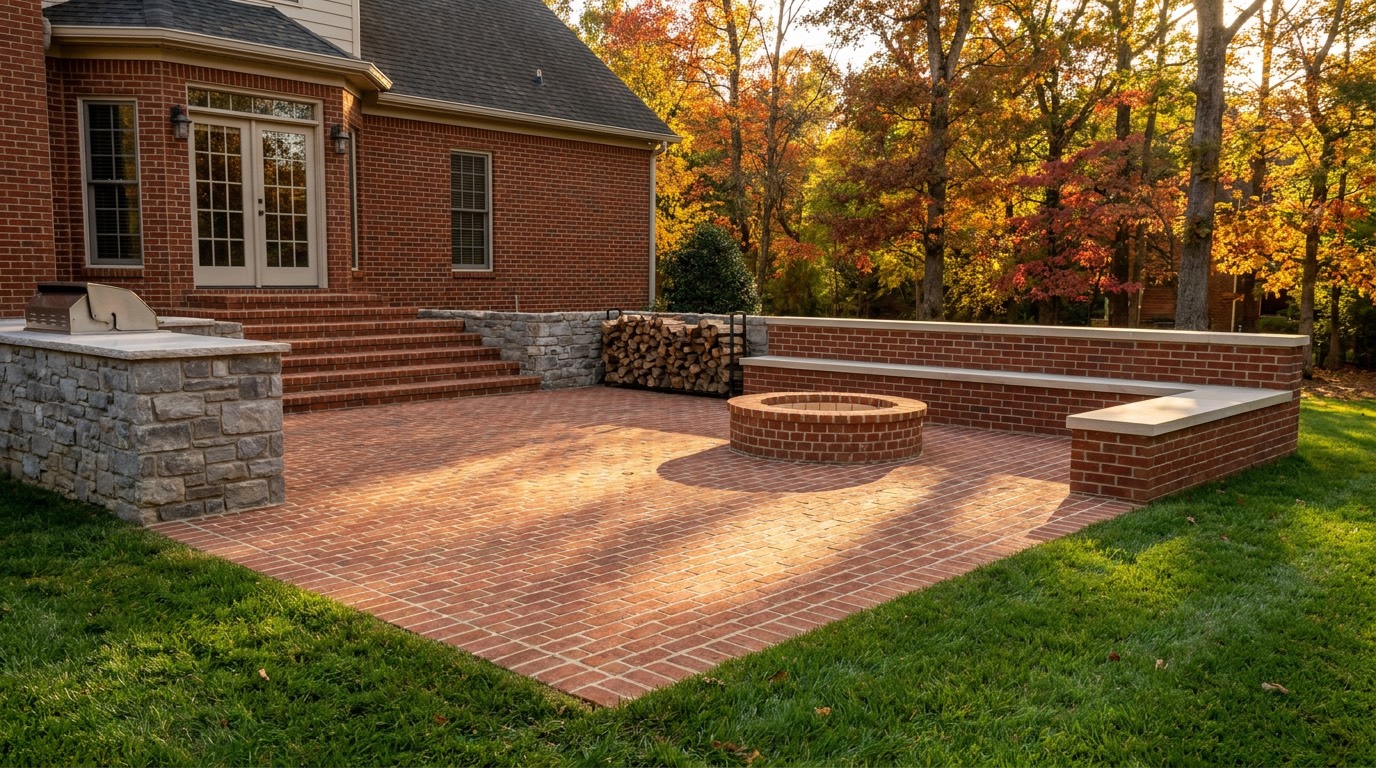
Outdoor Living Masonry
Patios, kitchens, fire pits and seat walls
Learn moreLebanon masonry questions
The stone piers under my old farmhouse are leaning. How serious is that?
It is worth addressing, though it is rarely an emergency. Leaning piers usually mean the base has settled or the mortar has failed, and the load is finding a new path. The repair is to support the framing, rebuild the pier plumb on a sound base, and repoint the stone around it. We check the whole crawl space before quoting, because piers usually fail in groups rather than alone.
Can an old stone spring house or cellar be saved?
Usually yes, and stabilizing one costs far less than rebuilding it. The work is repointing with a soft mortar that suits old stone, resetting stones that have dropped out, and managing the water that put the building there. If the goal is to stop further loss rather than make it look new, that is an affordable scope.
Do you work on barns, shops and outbuildings, or only houses?
Both, and outbuildings are a large share of our Wilson County work. Piers, knee walls, block repairs, foundations and chimney bases are all normal for us. Farm buildings often go faster than house work because access is better and the finish standard is practical rather than decorative, which shows in the price.
There is a gap opening between my chimney and the house. What causes it?
Most often the footing under the stack has settled, so the chimney is rotating slightly away from the wall. Sometimes it is the house that has moved instead. Either way, sealing the gap at the top solves nothing and hides the evidence. We look at the base first, then decide whether the stack needs underpinning, rebuilding or simply monitoring through another season. If you still burn wood in it, have a certified sweep check the flue as well. We do masonry and we do not certify flues.
Masonry quotes for Lebanon, TN
Call, or send the form and we will get you a written price.