Freeze-Thaw: Why Middle Tennessee Brick Breaks Down
It is not the cold that breaks brick. It is water in the brick, crossing freezing over and over, which is exactly what a Middle Tennessee winter delivers.
What is actually happening inside the brick
Fired clay brick is porous. Not sponge-like, but shot through with fine capillaries that hold water. Under a microscope a brick wall is a network of tiny reservoirs.
Water expands by roughly nine percent when it turns to ice. When a pore is full enough that the ice has nowhere to go, that expansion pushes outward on the pore walls. One cycle does nothing you can see. A few hundred cycles crack the structure between pores, and the outer face separates from the body behind it.
That is why spalling looks like the front of the brick fell off in a sheet. It did. The failure plane forms just behind the fired surface, where the pressure has been building for years.
Why our winter is harder than a colder one
Homeowners moving down from the Midwest expect masonry to fare better here. It often fares worse, and the reason has very little to do with how cold it gets.
What damages brick is the crossing, not the cold. A wall in Minnesota freezes hard in December and the water inside it stays ice until March. That is one crossing in an entire winter, and a wall on the Gulf coast never gets one at all. Middle Tennessee collects more of them than either, because our winter hovers around the freezing point instead of settling below it. A hard freeze overnight in Murfreesboro is routinely followed by an afternoon well above it, then another freeze that night. A wall that stays saturated here can cross the line dozens of times between December and February.
The other half of it is what our winter precipitation actually is. Snow mostly sits on a wall and blows off it. Rain soaks in. Around Rutherford County the standard pattern is a wet front and then a clear cold night behind it, which is exactly the order this mechanism needs. Fill the pores, then drop the temperature. Our walls go into most of their crossings already loaded.
So the number that matters is not the low a winter reached. It is how many times that winter crossed the line. Each crossing is one loading cycle on the same brick and they accumulate, which makes this a fatigue problem rather than a cold one. By that count Middle Tennessee is harder on masonry than places that freeze in December and do not thaw until spring.
Want a price for your own wall?
Four quick questions and we come back with a written quote. Or call (772) 251-6654 if that is faster.
Request a quote
Four questions, about a minute. We'll call you back.
No water, no damage
This is the part worth holding onto, because it is where the whole repair strategy comes from. Dry brick freezes harmlessly. Freeze-thaw damage requires the brick to be near saturation when the temperature drops.
So freeze-thaw is really a water management problem wearing a winter costume. Find where the wall is getting soaked and you have found the fix.
- Gutters overflowing or discharging against the wall
- Grade sloping back toward the foundation after a wet spell
- Weep holes blocked by mulch, caulk or mortar droppings
- A cracked chimney crown letting water into the stack from above
- Sprinkler heads hitting the wall every morning through the winter
- Horizontal surfaces with no wash: caps, sills, steps and wall tops
Where it turns up first
Damage concentrates in wet places, and the same short list appears on house after house around Murfreesboro and Smyrna.
Chimneys lead by a wide margin. A chimney is exposed on four sides, sits above the roof with nothing shading it, and takes rain from every direction. Then come the bottom courses near grade, where splash and soil contact keep brick damp. Then steps and treads, which hold standing water on purpose.
North and northeast faces get hit harder than sunny walls. They dry slowly, so they go into each freeze wetter than the rest of the house. If one elevation looks noticeably worse than the others, check which way it faces before assuming a defect.
Brick grade, salvage brick and the mortar question
Not all brick is made for this. Facing brick is manufactured to ASTM standards that distinguish between weathering exposures, and the severe weathering grade is what belongs on an exterior wall in a freeze-thaw climate. The Brick Industry Association publishes technical guidance on durability and exposure that any competent supplier will know.
This is where salvage brick catches people. Reclaimed interior brick, or soft old common brick pulled from a demolition, was never intended to face weather. It looks wonderful in a garden wall and it comes apart in about five winters.
Mortar matters just as much. Mortar harder than the brick it holds gives movement nowhere to go, so the brick takes the damage instead of the joint. On the older brick around the square this is the single most common way a repair makes a wall worse.
What actually stops it
Dry the wall out and the problem stops advancing. That means gutters, downspout extensions, grade, open weeps, a sound crown and repointed joints. Unglamorous, and it works.
What does not work is a film-forming sealer. Coating a brick wall that is already taking on water traps the moisture behind the film, and the next hard freeze pushes the face off with the sealer still attached. If a coating is being discussed at all, it should be a breathable one, applied after the water source is fixed, never instead of fixing it.
Two smaller habits help. Keep deicing salt off masonry steps and use sand for traction instead, since salt accelerates surface breakdown. And keep leaves and mulch pulled back from the base course so the bottom of the wall can dry between rains.
How the year is meant to run
Autumn is preparation. Clear the gutters, check the crown, pull mulch off the brick, and get soft joints repointed while the weather still allows it. That allowance runs out around forty degrees, and it runs out for the same reason the rest of this article exists. Green mortar is the wettest material on the wall, so the nine percent expansion that needs decades to break a brick will ruin a fresh joint in one night. The repair season closes just as the damage season opens. Work the calendar backward from that.
February and March are when the damage shows itself. New spalling, fresh sand at the base of a wall and popped faces all appear as the last cycles play out. That is the time to walk the house and take photographs.
Then repairs run from spring through autumn. Booking in early spring gets you ahead of the queue and gives the work a full dry season to cure before the next winter arrives.
Related questions
Will sealing my brick stop spalling?
Usually it makes things worse. A sealer that blocks vapor traps water already in the wall, and trapped water is exactly what freeze-thaw needs. Breathable water repellents have a narrow, legitimate role after the actual water source is corrected. They are never a substitute for gutters, grade and sound joints.
A few bricks have spalled. Is that urgent?
Not usually urgent, but it does not stop on its own. Once the fired face is gone the exposed body absorbs water faster, so the affected area tends to spread outward. Photograph it, watch it through a season, and plan replacement of the failed units along with whatever is keeping that spot wet.
Why is only my chimney damaged?
Because it is the wettest masonry on the property. It stands clear of the roof, catches rain on four sides, has no overhang protecting it, and depends on a crown that cracks with age. A house whose walls look fine while the chimney is failing is behaving completely normally.
Can spalled brick be turned around and reused?
Sometimes, and it depends which kind of wall you have. On the solid multi wythe walls around the Murfreesboro square a unit can occasionally be reversed, because there is a sound face on the back of it. The single wythe veneer across the newer subdivisions gives you nothing to turn to, so the repair is cutting out the failed units and setting matching replacements. On an older wall the matching is the hard part, not the labor.
Is new brick immune to this?
No, but modern facing brick made for severe weathering exposure holds up far better than soft historic or salvage brick. Where it makes the least difference is on an unheated building. A shop or a barn on a place outside Manchester has cold air on both sides of the wall, so nothing dries the masonry from within and the full thickness cycles together. Good brick buys margin. It does not buy immunity, and a bad downspout will still finish it.
Is salt on my brick steps really a problem?
It does not help. Deicing salts pull extra water into the surface and add crystal pressure on top of the freezing already going on, which speeds up breakdown on treads and caps. There is a Middle Tennessee wrinkle to it. We salt for a handful of events a winter and then get no real snowmelt to rinse anything off, so the salt sits on the steps for weeks doing that work. Sand gives traction without the chemistry. If salt has been down, rinse the steps once mild weather comes back.
References
Standards bodies and agencies referenced above. We are not affiliated with them.
More guides
All guides →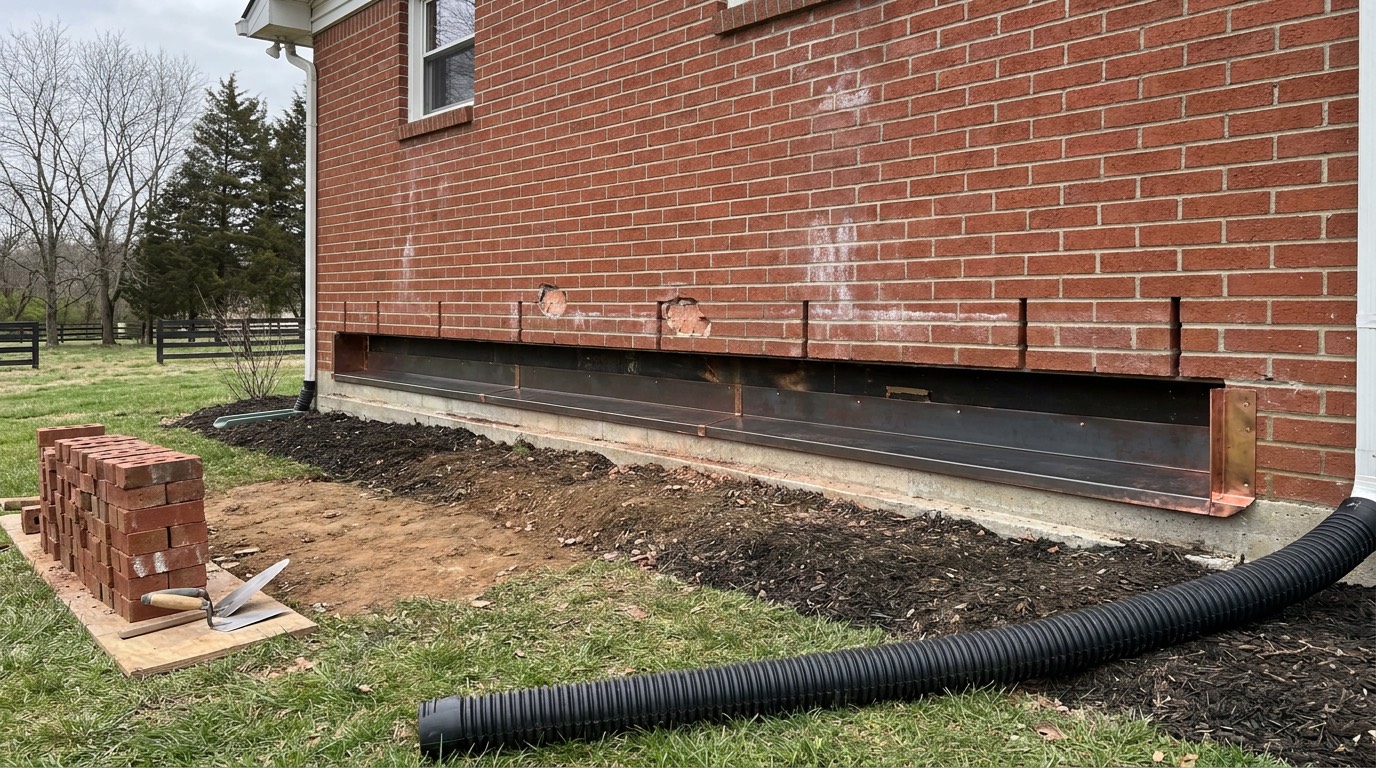 Maintenance
Gutters and Drainage: The Damage Nobody Blames on Water
Most of the brick damage we get called out to look at in Rutherford County traces back to a gutter or a downspout. Drainage is the cheapest masonry maintenance there is, and the most commonly skipped.
Read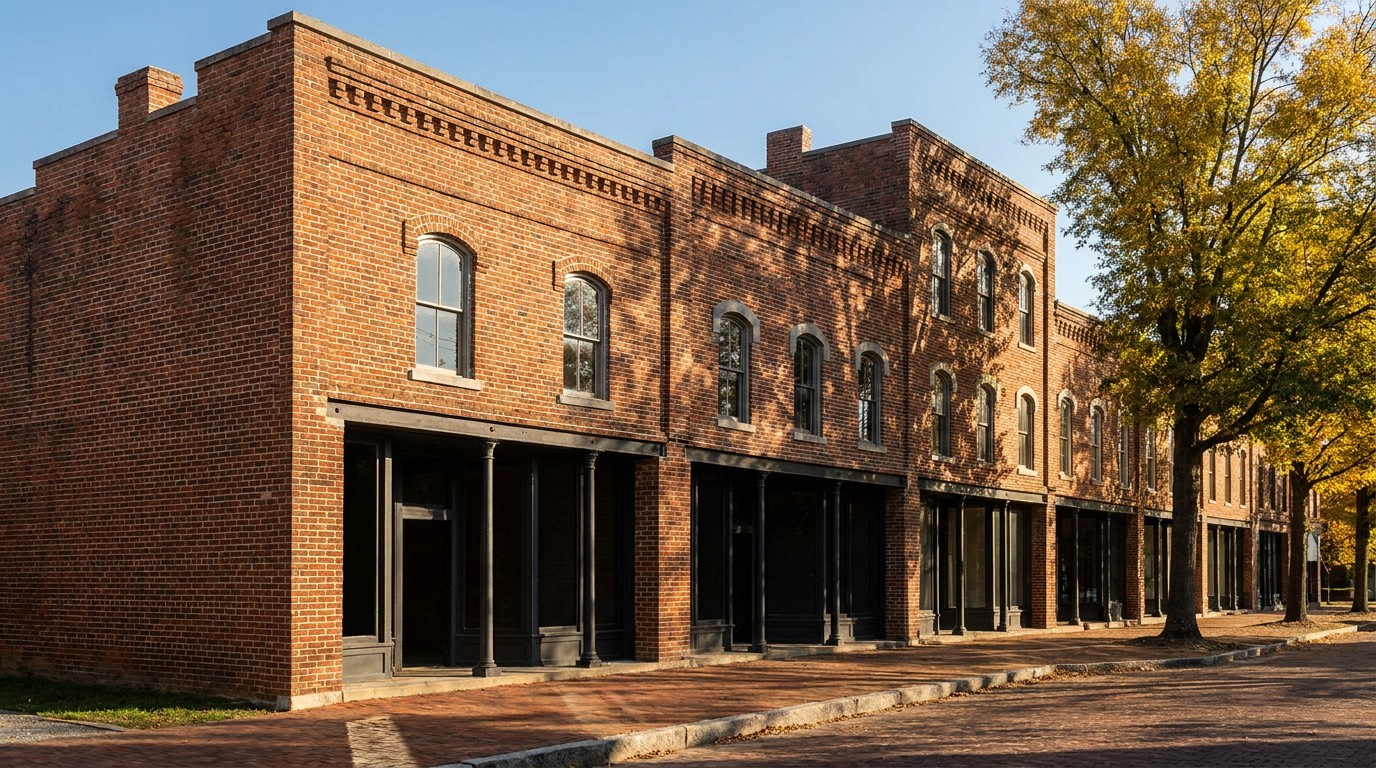 Local guide
Historic Brick Around the Murfreesboro Square: What It Needs
The brick downtown was made in a different century by a different process. Treat it like modern brick and you will watch the faces come off within a few winters.
Read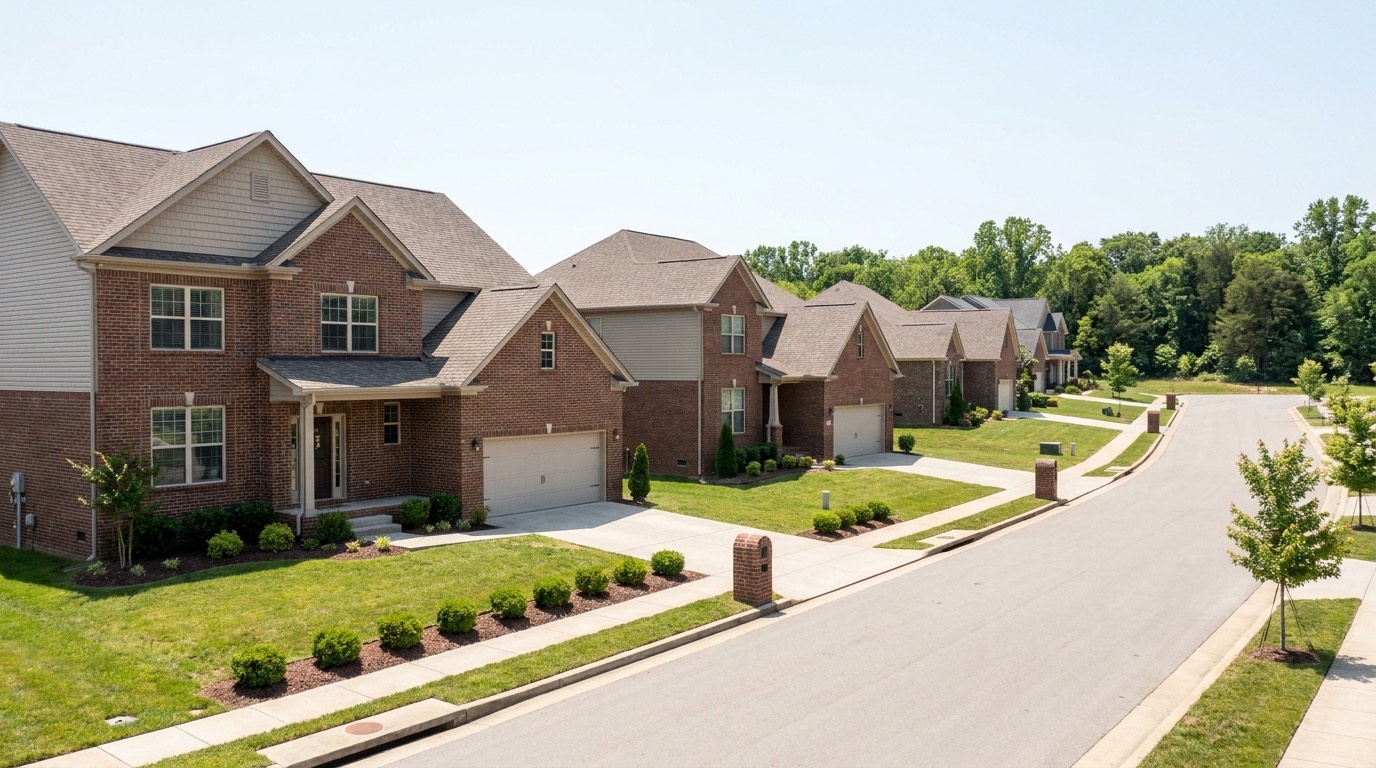 Local guide
HOA Rules and Brick Repair in Middle Tennessee
In most Middle Tennessee subdivisions the brick on your house is governed by covenants. Here is what architectural review usually wants, and why matching brick is the hard part.
Read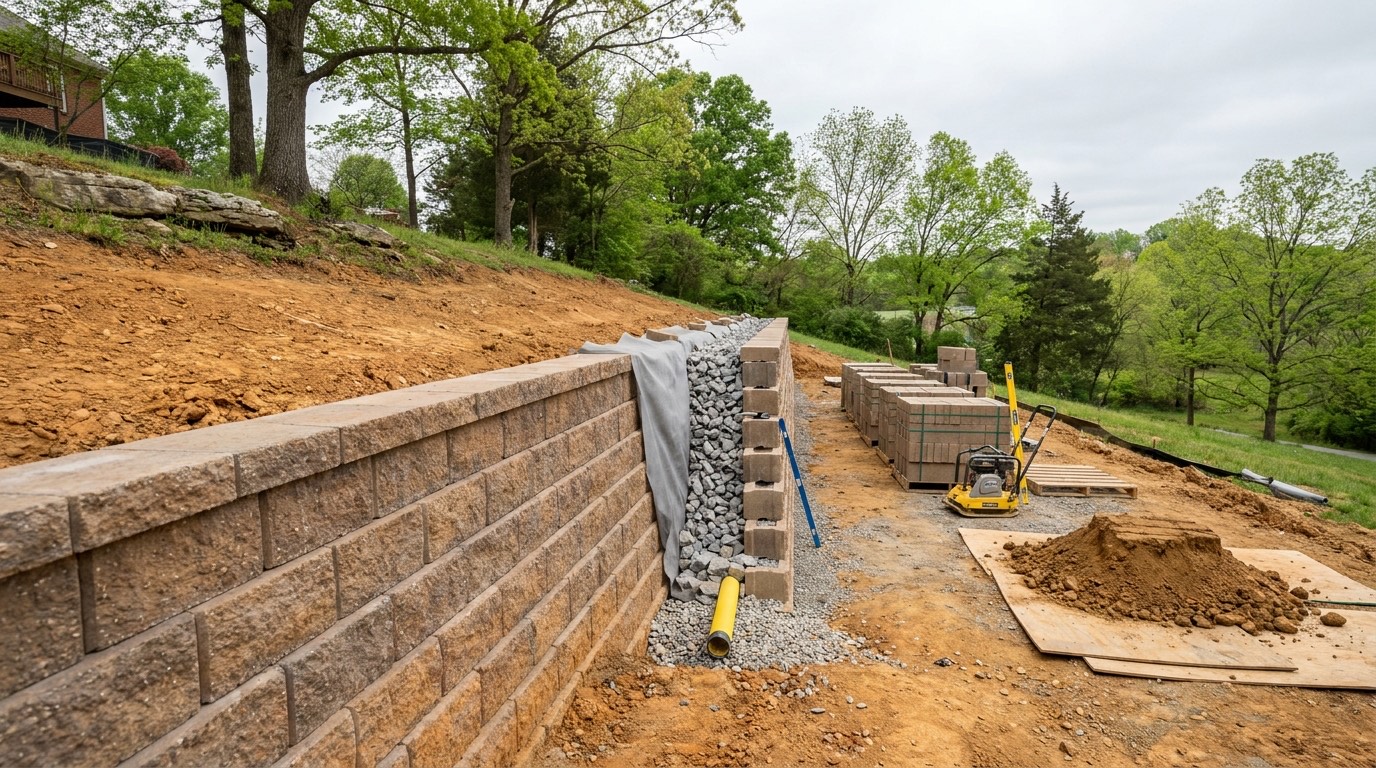 How it works
How a Retaining Wall Drains, and Why That Decides Everything
Retaining walls rarely fail because the blocks were weak. They fail because water got into the backfill and had nowhere to go. The drainage is the wall.
Read Hiring
How to Hire a Mason in Tennessee: What to Verify First
Masonry mistakes are permanent and expensive to undo. These are the things worth confirming before work starts, in the order a homeowner can actually do them.
ReadStraight answer on your wall.
Call, or send the form and we will get you a written price.