Brick Veneer or Solid Masonry: Two Walls That Look Identical
From the street they look the same. Behind the brick, one wall is carrying your house and the other is carrying only itself, and that changes what every crack means.
Same face, two different buildings
Two houses on the same street in Murfreesboro can show you the same brick, the same bond and the same joints, and be built on completely different principles behind that face.
One is solid masonry, where the brick is the structure. The other is brick veneer, where the brick is a weather skin hanging on a wood frame that does all the structural work. Almost everything that matters in a repair follows from which one you have.
Solid masonry: the wall is the building
A solid masonry wall is built from two or more wythes, meaning full thicknesses of brick stacked side by side and bonded together. Bonding was traditionally done with header courses, where bricks are turned end on and run through the wall to tie the wythes into one unit.
A wall like that carries the floors and the roof. It also handles water by mass. Rain soaks into the outer face, moves in a little way, then dries back out when the weather changes. There is no drainage layer, because the wall was never meant to be watertight. It was meant to be thick and to dry.
Around the historic Murfreesboro square and on nineteenth century farmhouses out in the county, this is what you are looking at. It is why those walls are unforgiving of hard modern mortar and sealed coatings. Anything that stops the wall drying works against the only water strategy it has.
Want a price for your own wall?
Four quick questions and we come back with a written quote. Or call (772) 251-6654 if that is faster.
Request a quote
Four questions, about a minute. We'll call you back.
Brick veneer: a rain screen on a frame house
Brick veneer is a single wythe of full thickness brick standing off the house with a gap behind it. It sits on a shelf cast into the foundation, called a brick ledge, and it carries nothing but its own weight up to the roof.
The structure is the wood frame behind it. Studs, sheathing and a water resistive barrier take the loads and keep the weather out. The brick is cladding, and a good deal of its job is done by the gap rather than the brick itself.
This describes most of the housing stock in Rutherford County. Everything built through the subdivision growth in Smyrna, La Vergne and the Blackman area is veneer, and so is the majority of postwar Murfreesboro. The Brick Industry Association publishes the technical notes that cover how these assemblies are meant to be detailed.
The air space is the whole idea
Brick is not waterproof and nobody building with it expects it to be. Wind driven rain pushes water through the face and through the joints, and the assembly is designed around that fact rather than against it.
Water that gets through runs down the back of the brick, lands on flashing at the base of the wall and at every opening, and leaves through weep holes in the bottom course. The gap is what makes that possible. It gives the water somewhere to run and it gives air a way to circulate and dry the back face.
Which is why the gap has to stay open. Mortar droppings piled on the flashing during construction dam the water. Weeps stuffed with mortar, painted over, caulked, or blocked by a mulch bed do the same. Foam sprayed into the cavity as an insulation upgrade is the worst version, because it removes the drainage plane entirely and hands the water to the framing behind it.
- Keep weep holes open and visible along the bottom course
- Keep mulch, soil and paving below the weep line
- Do not caulk, paint or fill weeps
- Do not fill the cavity with insulation
- Treat a wet interior wall below a window as a flashing question
Ties: the part doing the work that nobody inspects
A veneer wall is one brick thick and tall. On its own it would fall over. What keeps it upright is a set of metal ties fastened to the framing at one end and laid into the mortar bed joints at the other, spaced through the wall on a grid.
They are cheap, they are hidden, and they are the most consequential thing in the wall. Ties get missed during construction, fastened into sheathing instead of studs, bent flat rather than embedded properly, or set too far apart. Then they corrode, and corroding steel in a wet cavity is a slow problem with a sudden ending.
Tie failure shows up as a wall going out of plane. Sight along an elevation from the corner in low sun and look for a bulge, a wave, or brick leaning away from the eaves. That is a call to a mason rather than a thing to watch, because a veneer that is losing its ties is losing the only thing holding it to the house.
Working out which wall you have
You can usually settle this in ten minutes with a tape measure and a walk around the house.
Open a window and measure from the inside face of the wall to the outside face of the brick. A veneer wall over frame typically totals somewhere around nine to ten inches. A solid two wythe wall runs thicker and gives you deep window reveals you notice as soon as you sit on a sill.
Then check the base of the wall for weep holes, open head joints every couple of feet in the bottom course. Weeps mean a drained cavity, which means veneer. Header courses suggest solid construction, though take that one lightly on its own, since false headers exist to make veneer look traditional. Age helps too. Anything built here after the early nineteen fifties is veneer unless you have strong evidence otherwise.
- Wall thickness measured at a window or door reveal
- Weep holes in the bottom course, or above openings
- Header courses, treated as a hint rather than proof
- Depth of interior window sills and reveals
- The age of the house and of any additions
Why it changes what a crack means
In veneer, the brick is a messenger. A stair step crack running up from a corner is usually reporting movement underneath or behind it, in footings sitting on the shrink and swell clay we have here, or in the frame. Repointing the crack without understanding the movement gives you a tidy wall and the same crack again in two seasons.
In solid masonry, a crack can be the structure itself moving, because the wall and the structure are the same object. That raises the stakes and it is where a structural engineer earns their fee rather than a mason guessing.
The repair options differ just as much. A veneer panel can be taken down carefully, the brick salvaged, the flashing and ties corrected and the panel relaid. Opening a solid wall means shoring and a much larger conversation. Knowing which you own means the first visit starts in the right place.
Related questions
Is brick veneer weaker than solid brick?
It is not weaker, it is doing a different job. The brick in a veneer wall is usually the same full thickness fired clay unit used anywhere else. It simply carries its own weight instead of the house. The frame behind it is engineered for the structural loads.
Is veneer the same as those thin brick panels?
No, and the shared word causes confusion. Thin brick is a facing product roughly half an inch to an inch thick, bonded to a backer like tile. Structural brick veneer is a full brick standing in its own wythe with an air gap behind it.
Can I insulate the cavity behind my brick?
Not by filling the drainage gap. That space is how water gets back out of the wall, and it earns its keep in a Tennessee spring, when a two day soaking rain drives water through the brick front to back. Close the gap and that water has nowhere to go but the framing. If insulation is the goal, the place for it is the wall assembly behind the brick or the attic, not the cavity.
My house near the square is from the twenties. Which is it?
Likely solid masonry, and worth confirming rather than assuming. The older housing around the Murfreesboro courthouse square was generally built as solid wall, two or three wythes bonded together with header courses, which is why those walls have no weep holes: there is no cavity to drain. Measure the wall thickness at a window opening and look along a course for headers turned end on. Additions and rear extensions on those houses are frequently veneer, so one building can honestly be both.
Can I hang a heavy fixture on a veneer wall?
Light items fastened into a joint are fine. Anything with real weight, such as a television bracket, an awning or a handrail, should be fastened through to the framing behind and the penetration sealed. The veneer is not designed to carry added load.
Should I drill weep holes into my old solid brick wall?
No, not on your own initiative. A solid wall handles water by absorbing it and drying back out, not by draining a cavity, and there is nothing behind it to drain into. Drilling opens a water path the wall was never designed to have. This comes up most on the older farmhouses and outbuildings down around Manchester, where the walls are solid and somebody has been told weep holes are standard. Ask a mason who works on older buildings before a bit goes anywhere near it.
More guides
All guides →Bulging Brick: What It Means and When It Is Serious
Most people find it by accident, standing at the wrong angle in evening light. A bulge is not automatically an emergency, but it is never nothing, and the difference is measurable.
ReadChimney Anatomy: Crown, Flashing and Flue, and What Fails First
Most chimney leaks get blamed on the brick. The brick is rarely where it started. A plain walk through the parts, from the cap down to the roofline.
ReadA Chimney Maintenance Schedule You Can Actually Keep
Chimneys get sold on fear more than any other part of a masonry house. Here is a plain schedule: what to look at yearly, what runs on a longer clock, and what can simply be watched.
ReadWhat Chimney Repair Costs in Murfreesboro
Chimney repair covers four jobs that share a name and not much else. Working out which one your chimney needs gets you most of the way to understanding the quote.
Read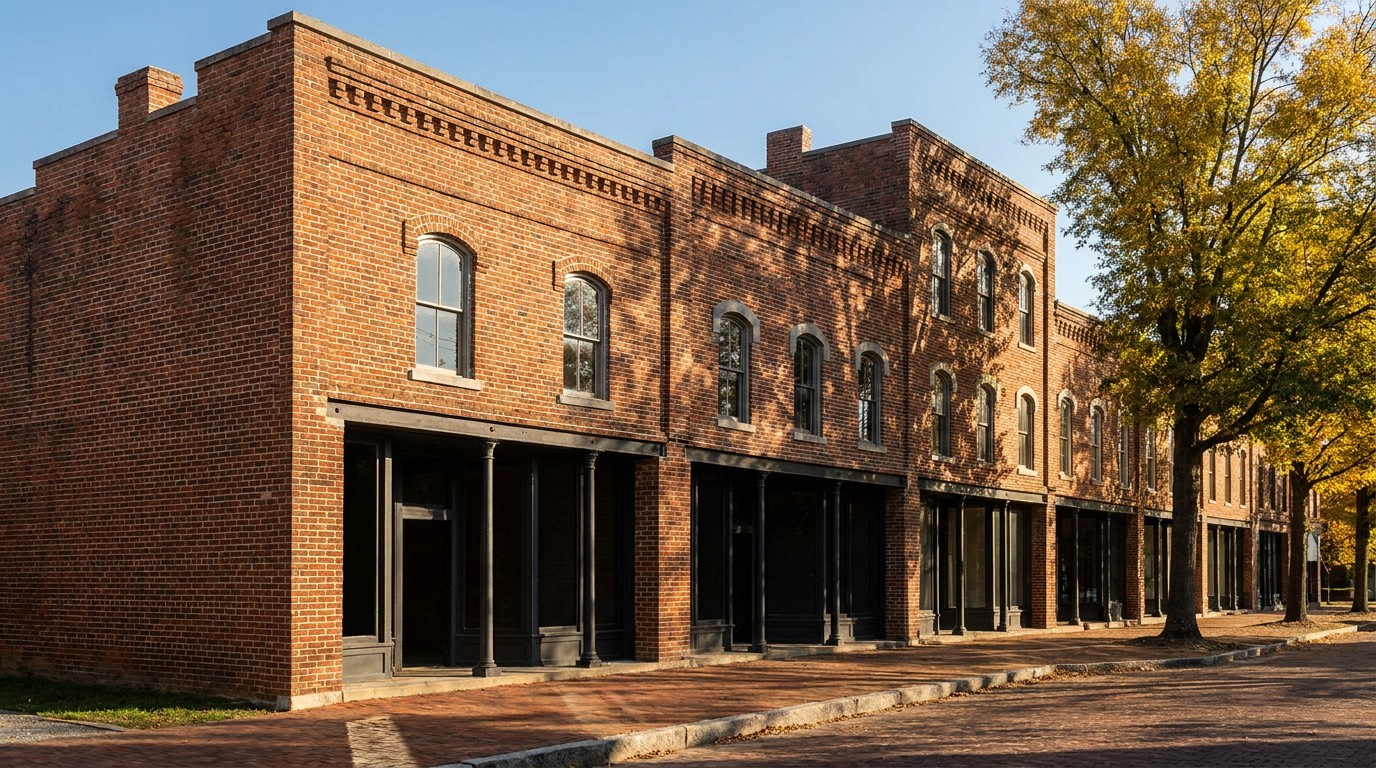 Local guide
Restoring Civil War Era Brick in and Around Murfreesboro
Brick laid in Rutherford County before and around the 1860s behaves nothing like brick from a modern kiln. Treating it with modern materials is how a great deal of irreplaceable fabric has been lost.
ReadStraight answer on your wall.
Call, or send the form and we will get you a written price.