Chimney Anatomy: Crown, Flashing and Flue, and What Fails First
Most chimney leaks get blamed on the brick. The brick is rarely where it started. A plain walk through the parts, from the cap down to the roofline.
Four systems stacked in one column
People talk about a chimney as though it were one object. It is really four different assemblies sharing a footprint, built by different trades, failing on different schedules and for unrelated reasons.
There is the masonry shell, which is brick or stone and mortar. There is the flue inside it, which carries combustion products out. There is the crown on top, which sheds water off the whole thing. And there is the flashing at the roofline, which is sheet metal, not masonry at all. Knowing which one you are looking at is most of the diagnosis, because a stain on a ceiling can come from any of the four and the repairs have almost nothing in common.
- Cap: the metal or stone lid over the flue opening, with screen
- Crown: the sloped slab covering the top of the masonry around the flue
- Flue and liner: the passage the smoke and gases travel up
- Shell: the brick or stone and its mortar joints
- Flashing: the metal weaving the chimney into the roof surface
- Smoke chamber and firebox: down inside the house at the bottom
The crown, and the mortar wash pretending to be one
The crown is the roof of your chimney. Done right it is a reinforced concrete slab, several inches thick at the center, sloped so water runs off, projecting past the brick face with a drip edge underneath so runoff falls clear instead of curling back down the wall. It should also have a bond break or expansion joint where it meets the flue tile, since the two move at different rates.
What sits on a great many chimneys around Murfreesboro instead is a mortar wash. A skim of mortar troweled flat across the top, no reinforcement, no overhang, no thickness. It works for a while. Then it cracks, because thin mortar over a wide span always cracks, and every one of those cracks becomes a funnel pointing straight down into the masonry.
Want a price for your own wall?
Four quick questions and we come back with a written quote. Or call (772) 251-6654 if that is faster.
Request a quote
Four questions, about a minute. We'll call you back.
Flashing is metal, and it still leaks
Flashing is two layers doing one job. Step flashing runs up the slope in pieces woven under the shingle courses. Counterflashing is let into a mortar joint in the brick, bent down and lapped over the step pieces so water tracking down the masonry face is shed onto the roof rather than behind it. On a wide chimney on a steep roof there should also be a cricket, a small peaked structure on the uphill side that splits water around the stack instead of letting it pond against the back wall.
Failures here look like tar. Somebody found a leak, ran roofing cement along the joint, and it held for two seasons before the sun broke it down. Then the next person put more tar on the old tar. Black smears in a corner where a chimney meets a roof are a sign that the flashing needs redoing, not that the last repair almost worked.
The flue and its liner
The liner is the surface the fire actually touches. Older chimneys around the historic square may have no liner at all, just brick, which was normal when they were built. Mid century houses generally have clay tile sections stacked inside the shell. Newer work and most relines use stainless steel.
Clay tile fails in ways you cannot see from your living room. Joints between sections open up, the tile cracks from a chimney fire or from heat cycling, and pieces spall loose and drop. That matters for two reasons. Combustion gases get into the shell and into the house, and heat reaches masonry that was never meant to see it. Nobody diagnoses a liner from the ground. This is what a camera inspection is for, and it is the part of chimney work worth paying a sweep to do properly.
The brick up there works harder than any other brick you own
Chimney masonry above the roofline is the most exposed masonry on a house, and in Middle Tennessee that exposure is specific. It gets wet from every direction including the top. It has air on all four sides, so it freezes sooner and stays frozen longer than a wall backed by a heated house. And through December, January and February we cycle above and below freezing over and over.
That cycle is the local failure mechanism. Water soaks into a joint or a brick face, freezes overnight, expands, and pushes a little material loose. Thaw, soak, repeat. It shows up as sandy mortar you can rake out with a screwdriver, brick faces flaking or popping off, and a stack whose top three or four courses look noticeably rougher than the ones below. Damage concentrates near the top because that is where the water gets in first.
The order things usually fail
There is a normal sequence and it starts at the top nearly every time. The crown cracks first, because a thin mortar wash was never going to last. Water then runs down inside the masonry rather than off it.
Next the joints go, worst in the exposed courses above the roof, since water now sits in the wall through every freeze. Then the brick faces spall. Meanwhile the flashing is aging independently on its own clock, and once either the crown or the flashing lets water into the structure the two problems get blamed on each other for years. That is the practical reason a good crown is cheap insurance. Repairing one at the right moment prevents a rebuild above the roofline later, and rebuilding a stack costs several times what a crown does.
What you can check from the ground
You can learn a lot with binoculars from the yard and never touch a ladder. Do it on a bright morning, walking around all four sides of the house.
Look for a missing or rusted cap, a crown that is cracked or has no overhang past the brick, mortar joints that read dark and recessed compared with the rest, pale or pitted brick faces near the top, a stack that is out of plumb against the roof line behind it, tar smeared at the roof junction, and rust or white staining running down the brick. Inside, check the ceiling and walls near the chimney chase for stains, and look for damp or a musty smell in the firebox after rain. Anything beyond that means a roof or a camera, and neither is worth a homeowner falling off a ladder.
Related questions
What is the difference between a chimney cap and a crown?
The cap is the small lid over the flue opening itself, usually stainless or galvanized, with a screen to keep out rain, birds and embers. The crown is the sloped slab covering the whole top of the masonry around that flue. Different parts, different materials, different repairs.
Can a cracked crown be patched or does it need replacing?
Hairline cracks in a sound concrete crown can be treated with a flexible crown coating. A thin mortar wash that has broken up, lost its overhang or is holding water is better removed and recast properly, with a real slope, an overhang past the brick and a bond break at the flue.
Water is coming in near my chimney. Is it the flashing?
It might be, and it might be the crown, which collects water on top and runs it down inside the masonry to the same ceiling stain. Timing separates them better than looking does. A leak that only shows during a hard wind driven rain usually points at flashing. A leak that appears a day or two into a long wet spell, once the stack has soaked through, points at the crown or the joints. Middle Tennessee gives you both kinds of rain in the same spring, so note which one produced the stain. Then have a mason and a roofer look at the crown, the joints and the counterflashing together before anyone starts cutting.
Do I need a liner if I never light a fire?
An unused fireplace does not need a working flue, but the chimney still needs to keep water out. If you have permanently stopped using it, the sensible path is a proper cap, a sound crown and intact joints, plus sealing off the flue at the bottom so it is not venting cold air into the house.
Why does my chimney look worse than the rest of my brick?
Because it is exposed on all four sides and open at the top. A house wall dries on one face and gets some warmth from the room behind it. A stack has cold air all the way around it and nothing heating it from within. On a typical Tennessee January night that difference decides which one actually freezes: the house wall often does not chill through, and the chimney always does. Repeat that through a winter and the stack is where damage turns up first.
Should chimney repairs wait for warmer weather?
Half of a chimney can be worked on in January and half cannot, and the split follows the four systems. Anything mixed wet has a floor. Below roughly forty degrees mortar and crown concrete will not cure without heated materials and an enclosure, and December into February in Middle Tennessee sits under that line often enough that recasting a crown, repointing the stack or rebuilding above the roofline becomes spring through fall work. The metal has no such limit. A cap, a run of counterflashing or a cricket goes on in cold weather without penalty. So if the crown is open in December, the sensible order is a temporary cover and the metal work now, masonry on the spring schedule.
More guides
All guides →A Chimney Maintenance Schedule You Can Actually Keep
Chimneys get sold on fear more than any other part of a masonry house. Here is a plain schedule: what to look at yearly, what runs on a longer clock, and what can simply be watched.
ReadWhat Chimney Repair Costs in Murfreesboro
Chimney repair covers four jobs that share a name and not much else. Working out which one your chimney needs gets you most of the way to understanding the quote.
Read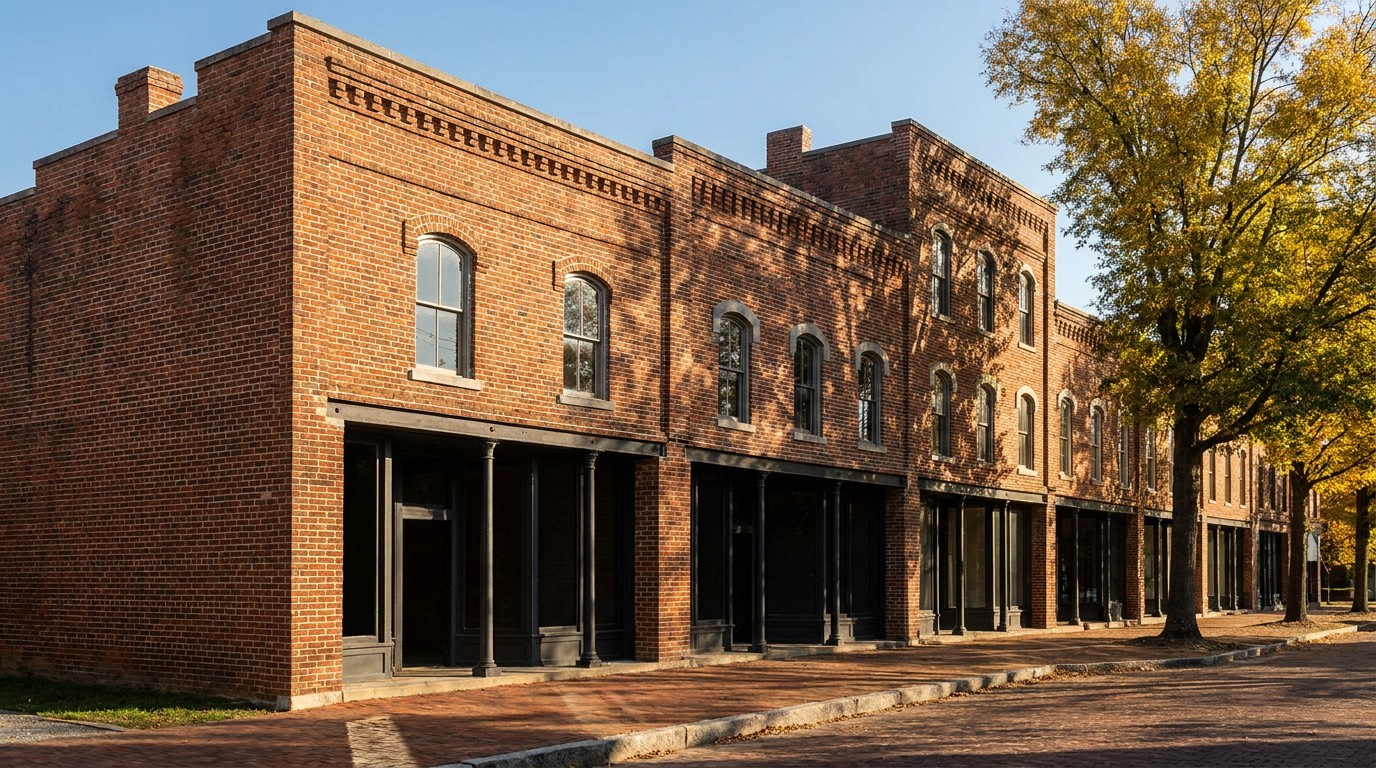 Local guide
Restoring Civil War Era Brick in and Around Murfreesboro
Brick laid in Rutherford County before and around the 1860s behaves nothing like brick from a modern kiln. Treating it with modern materials is how a great deal of irreplaceable fabric has been lost.
ReadCleaning Brick Without Damaging It
Dirt is temporary. A brick face burned open by the wrong cleaner is not. Here is how to identify what you have, match the method to the stain, and test before you commit.
Read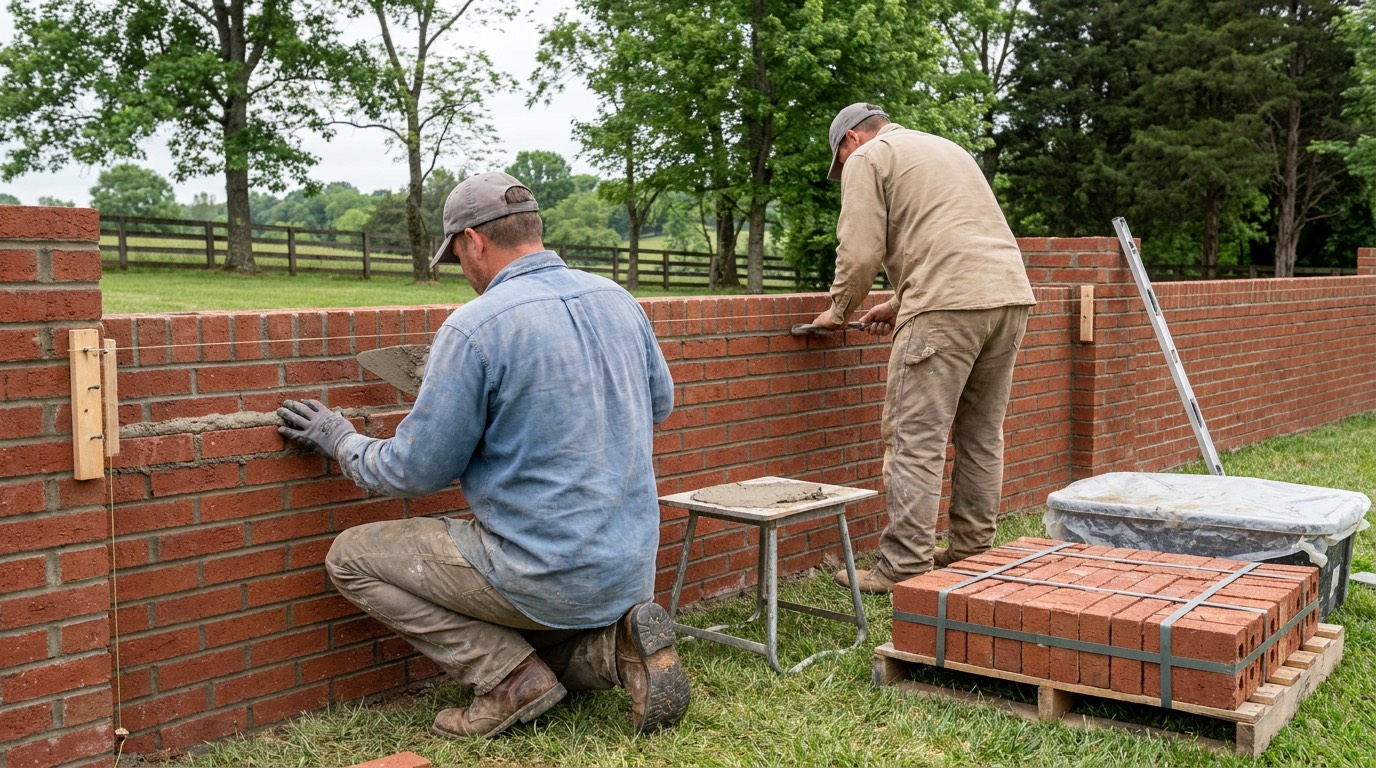 Seasonal
Cold Weather Masonry: Where the Real Limits Are
Masonry in Middle Tennessee has a real winter slowdown, and any contractor who says otherwise is skipping something. Here is where the limits are and what still gets built.
ReadStraight answer on your wall.
Call, or send the form and we will get you a written price.