What Chimney Repair Costs in Murfreesboro
Chimney repair covers four jobs that share a name and not much else. Working out which one your chimney needs gets you most of the way to understanding the quote.
Four jobs, one word
Chimney repair can mean a two hour visit with a bag of crown mix, or a week of scaffolding and a thousand new brick. The same two words cover both. That is why a homeowner calls three masons in Murfreesboro and gets three numbers that look priced for three different houses.
Nearly all residential chimney work here lands in one of four buckets. The crown on top, the flashing at the roofline, repointing the exposed stack, and rebuilding that stack. Where a figure below came from a Murfreesboro contractor we say so, and where it came from national data we say that too. All of them move with height and access, and nobody prices a chimney from a photograph.
The crown, and why it goes first here
The crown is the slab on top. Its whole job is throwing water clear of the brick below, so a good one is poured concrete, reinforced, sloped, and hanging past the face with a drip edge cut underneath.
A great many crowns here are not that. They are a thin mortar wash troweled flush with the top course, no steel and no overhang. It shrinks, cracks, holds water, and a January freeze widens the crack. Sealing a sound crown with a flexible coating is the cheapest work on this page, and on a crown that is still solid it is the right call rather than the cheap one. Cutting off a failed wash and pouring a proper reinforced slab is the real job. A full crown rebuild around Murfreesboro runs $1,000 to $2,500 and up on an ordinary single flue stack.
- Cracks in the top slab you can catch a fingernail in
- Corners broken away, or loose pieces sitting on the shingles
- A top flush with the brick rather than overhanging it
- Dark staining down the top few courses after rain
- Gaps where the crown meets the clay flue tile
Want a price for your own wall?
Four quick questions and we come back with a written quote. Or call (772) 251-6654 if that is faster.
Request a quote
Four questions, about a minute. We'll call you back.
Flashing, which is often not a masonry problem
Most chimney leaks are not coming through the brick. They come through the joint at the roof, and that connection is two layers. Step flashing woven into the shingle courses, and counterflashing cut into a mortar joint and folded down over it.
The counterflashing is what fails, usually because somebody ran caulk against the brick instead of cutting a reglet into the joint. Caulk on a south facing stack gets two or three years, then water goes behind it and people replace shingles that were fine. We are not printing a range for flashing, because what sets it is roof pitch, the width of the stack and whether shingle courses have to be lifted, and those swing the number further than the masonry in it does. A mason who says a roofer should own part of this is describing the job honestly.
Repointing the stack above the roof
The section standing above the roofline is the hardest working masonry on the house. Wind driven rain on four sides, no eave over it, and its own soaking and freezing schedule. Those joints routinely fail twenty years before the joints at ground level on the same house.
Real repointing grinds the old mortar out to roughly twice the joint width, then packs new mortar back in layers. Masons quote it by the square foot of wall, and a stack is a small area that is expensive to stand next to. Above eight feet, where scaffolding is part of the work, repointing and tuckpointing commonly run $5 to $25 per square foot. That is national pricing rather than a Rutherford County rate, and the small quantity on a chimney pushes toward the upper half of it. Patching only the worst joints while the rest are soft means paying for the setup twice.
Rebuilding above the flashing line
There comes a point where repointing is money spent on a wall that is finished. Faces popped off across the stack, corners rounded and crumbling, a visible lean. New mortar between failing brick solves none of that. The stack comes down to a sound course, usually at or just below the flashing, and gets built back.
The published figures for an above roofline rebuild do not agree well enough for us to repeat one here. What is safe to describe is the shape of it. A rebuild is a multi day job carrying tearout, disposal, staging and new material, so it costs a multiple of repointing the same stack rather than a little more, and the brick decides how large that multiple gets. Salvaging the original takes labor but keeps the look. Matching a 1920s brick near the historic square is a different exercise from matching a 2015 veneer in Smyrna. Work below the roofline is a separate conversation and does not follow on from the stack in a straight line.
- Brick faces flaking or popping off across more than a few units
- A stack out of plumb when sighted against a corner of the house
- Joints you can rake an inch deep with a screwdriver and no effort
- Whole brick loose enough to rock by hand
The things that actually move the number
Access explains most of the spread. A walkable pitch a mason can work off roof jacks is one job. A steep pitch, a third story, or a stack reachable only over a screened porch means scaffolding, and scaffolding is time and equipment before a single joint gets touched.
Season matters here in a way it does not further south. Mortar work generally stops below about forty degrees Fahrenheit unless the crew brings cold weather protection, which means warmed materials and enclosed work. That is real cost. January chimney work in Murfreesboro is either scheduled around the forecast or paid for with tenting.
- Roof pitch, chimney height, and scaffold versus ladder access
- Single flue against multiple flues sharing one stack
- Whether the chase cover, cap and spark arrestor are included
- Brick matching, especially on older Murfreesboro and Woodbury houses
- Tearout, hauling and disposal of the old material
Reading three quotes that do not agree
Line them up and ignore the totals for a minute. Work out which of the four jobs each one is pricing. The cheap quote is frequently not cheap, just narrower. A crown seal and a crown replacement are both honest work, separated by a few hundred dollars and about fifteen years.
Then ask what mortar type is going in and why, whether the joints are being ground or scraped, whether the new crown overhangs with a drip edge, and whether the counterflashing is cut into a joint or sealed to the face. Ask for photos from the roof, since a chimney is the one part of a house you cannot inspect yourself. A good mason will sometimes tell you to watch a stack for a couple of years rather than sell a rebuild. Whatever this page says, the only number that means anything comes from somebody standing next to your chimney.
Related questions
Can I just have the chimney sealed instead of repaired?
A repellent on sound brick can help, but it does nothing for open joints, a cracked crown or bad flashing. Sealing over those traps moisture in the wall, which is exactly what freeze and thaw needs to break brick faces off. Fix the water path first.
We never use the fireplace. Does the chimney still need work?
Yes, because the problem is weather, not fire. A chimney is an exposed masonry column standing above the roof taking water on four sides, and it deteriorates on the same schedule whether or not anyone lights it. An unused stack with a failed crown still puts water in the ceiling below.
Do I need a permit for chimney repair in Rutherford County?
It depends on the scope, and it is not something to take on faith. Repointing and rebuilding are usually treated differently. Call the Rutherford County building department, or your city office if you are in Murfreesboro, Smyrna or La Vergne, and ask about your specific job before work starts.
Why is a winter quote higher than a summer one?
Because a January chimney job in Middle Tennessee is bought around a forecast rather than a calendar. Winter here does not settle in and stay put. It goes over and under freezing week after week, so a crew can lose two days out of five and still owe you a finished stack. Heating materials and tenting the work is what buys through that, and it is a real line on the invoice. If nothing is getting into the house, booking the same repair for spring is usually the cheaper way to buy it.
There is white powder on my chimney brick. Is that damage?
That is efflorescence, salt carried to the surface as water moves through masonry and evaporates. The powder is cosmetic and usually brushes off. What it tells you is that water is getting in somewhere, most often a cracked crown or open joints. Treat it as a symptom to trace.
My chimney is pulling away from the house. Is that in these ranges?
No. A stack separating from the wall is usually a footing or soil problem rather than a brick problem, and our shrink and swell clay produces plenty of them. That work starts below grade and often needs a structural engineer first. Rebuilding the top of a chimney on a moving footing wastes the money.
More guides
All guides →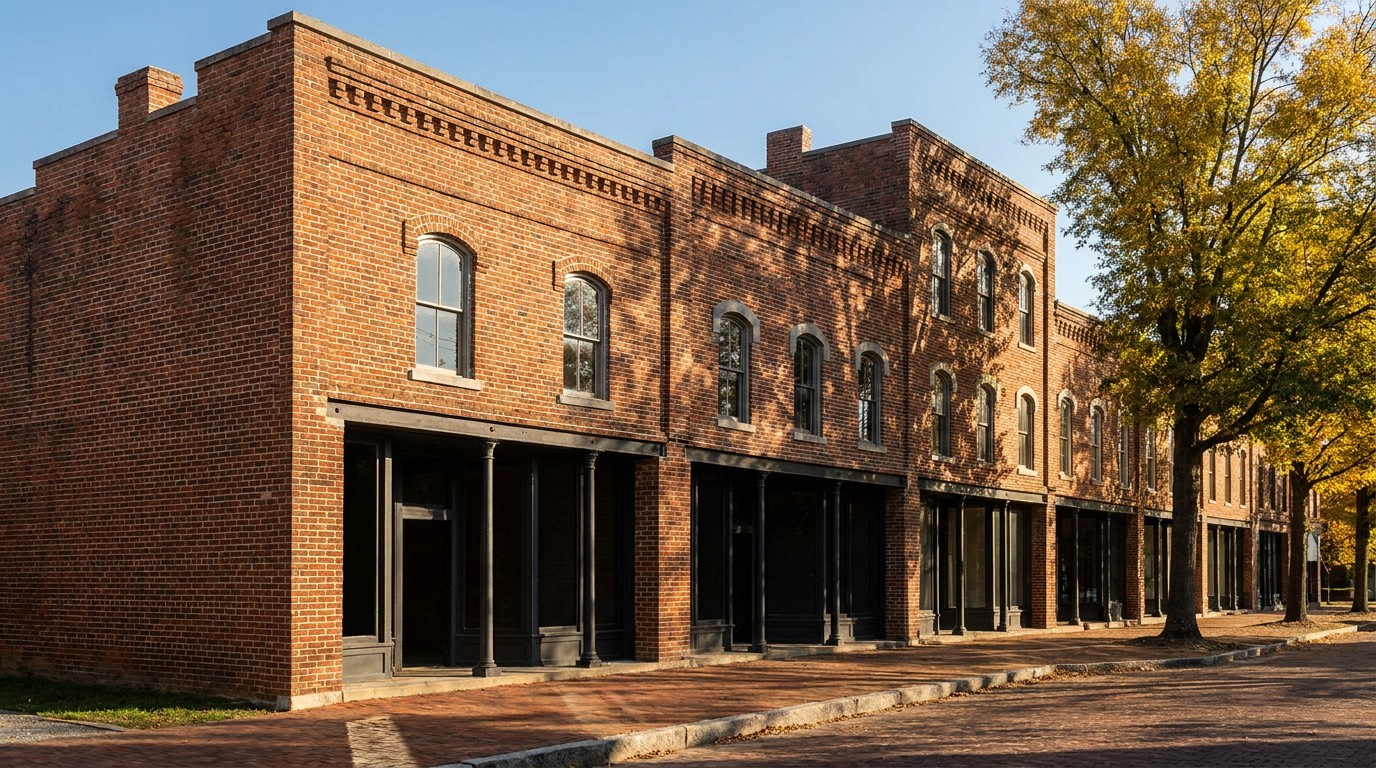 Local guide
Restoring Civil War Era Brick in and Around Murfreesboro
Brick laid in Rutherford County before and around the 1860s behaves nothing like brick from a modern kiln. Treating it with modern materials is how a great deal of irreplaceable fabric has been lost.
ReadCleaning Brick Without Damaging It
Dirt is temporary. A brick face burned open by the wrong cleaner is not. Here is how to identify what you have, match the method to the stain, and test before you commit.
Read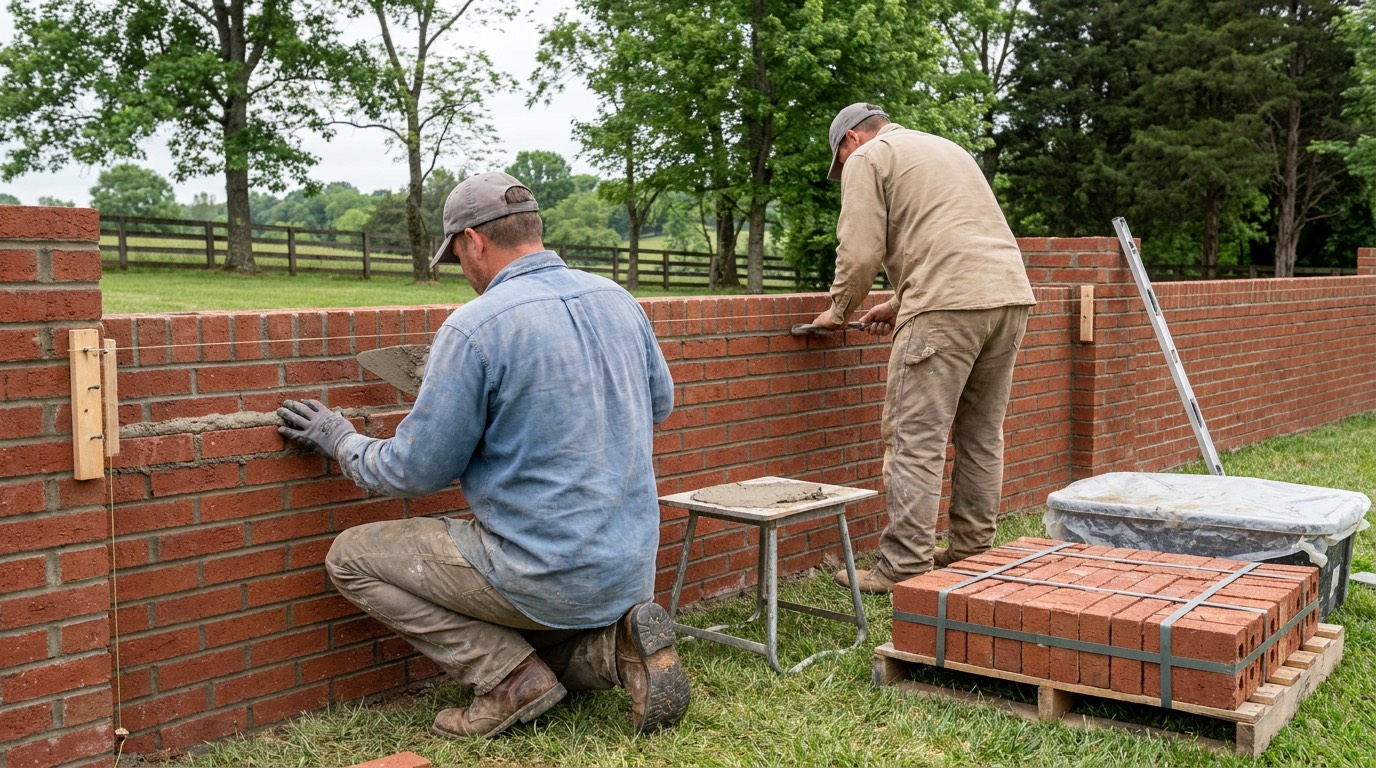 Seasonal
Cold Weather Masonry: Where the Real Limits Are
Masonry in Middle Tennessee has a real winter slowdown, and any contractor who says otherwise is skipping something. Here is where the limits are and what still gets built.
ReadCracked Brick Veneer or a Structural Crack? How to Tell
Not every crack in a brick wall means the house is moving. Here is how to read one, which patterns are cosmetic, and the point where guessing should stop.
ReadCrumbling Mortar: How to Tell When Brick Needs Repointing
Mortar is designed to be the part that gives up first. The useful question is not whether yours is deteriorating, but how deep it has gone and whether it is time to act.
ReadStraight answer on your wall.
Call, or send the form and we will get you a written price.