What to Watch on New Brick Veneer in Smyrna and La Vergne
A ten year old subdivision house is not old. It is just old enough for the details behind the brick to start reporting on how carefully they were built.
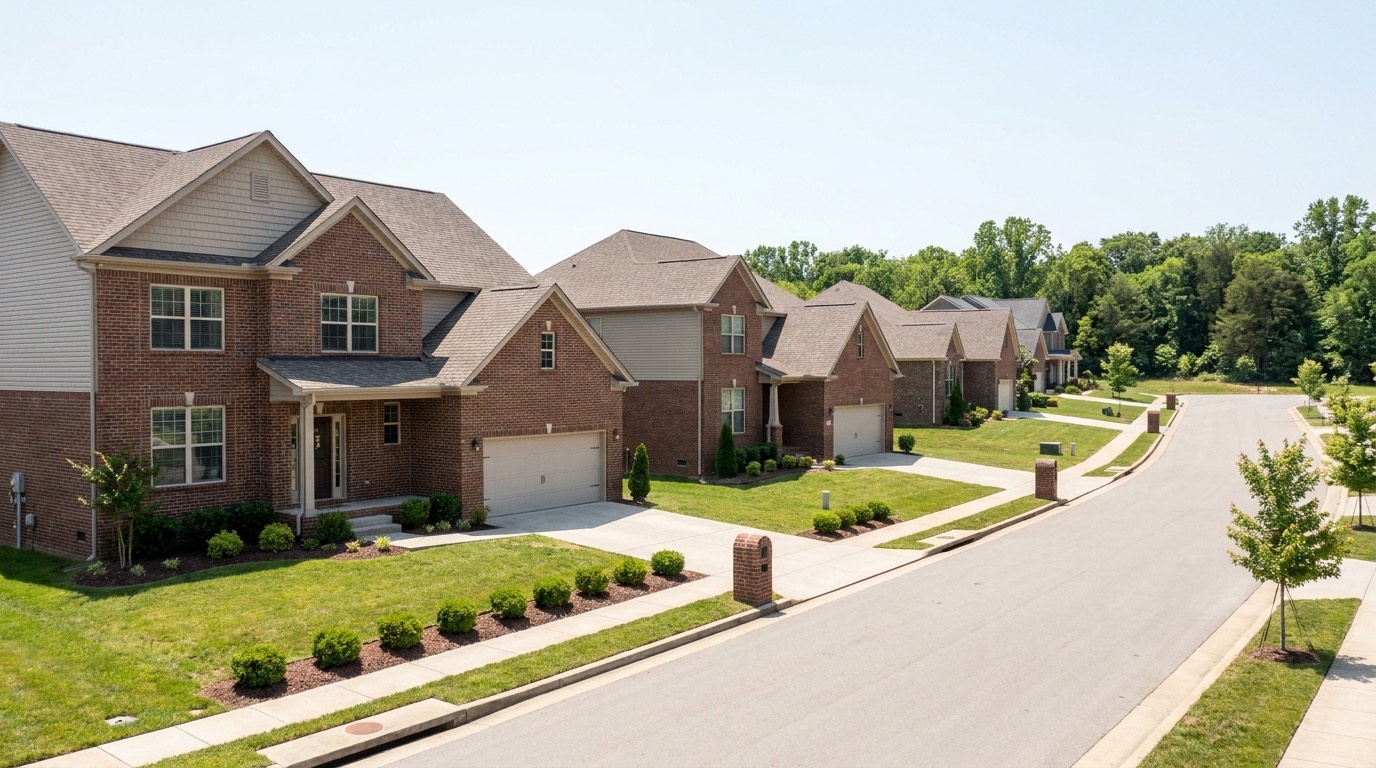
What the growth along I-24 actually built
Smyrna and La Vergne filled in fast, and they filled in with brick. Nashville commuters wanted a shorter drive than Murfreesboro offered and more house than Davidson County prices allowed, and production builders answered with subdivisions of brick fronted and brick wrapped homes put up on a schedule.
That stock is now at the age where things start to talk. Ten or fifteen years is not old masonry by any measure. It is exactly old enough for the buried details to report on how carefully they were installed, because most veneer defects need a decade of weather before they surface. None of this means the work was bad. Plenty of it was good. But a fast schedule is where hidden parts get shortened.
Veneer is a system and the parts that fail are hidden
Your brick is a single wythe standing on the foundation ledge. It carries itself and nothing else. The house behind it is framing, sheathing and a water resistive barrier, and between the two there should be an open air space of roughly an inch.
That space is a drain. Water gets through brick in wind driven rain, runs down the back face, lands on flashing and leaves through weep holes at the bottom course and above the windows. Corrugated ties nailed into the studs hold the brick upright without closing the cavity. Every one of those components disappears the moment the next course goes on, which is why problems announce themselves years later through the face of the wall rather than during the build.
Want a price for your own wall?
Four quick questions and we come back with a written quote. Or call (772) 251-6654 if that is faster.
Request a quote
Four questions, about a minute. We'll call you back.
The shortcuts that show up most often
These are not theories about builders. They are the specific things we find when walls of this vintage get opened, and most come from working quickly rather than dishonestly.
Mortar droppings in the cavity lead by a distance. As courses go up, mortar squeezes out of the back of each joint and falls. If nobody keeps the base clear, the droppings pile on the flashing and bury the weeps from behind, where clearing from outside never reaches them. Second is flashing that stops short: no end dams at the ends of a lintel flashing, no turn up behind the water resistive barrier, or sealant used where a flashing membrane belonged. It works fine for a few years while the caulk is fresh.
- Mortar droppings buried on the base flashing, blocking weeps from inside
- Weeps left out above windows and doors, where they matter most
- Lintel flashings with no turned up end dams
- Ties nailed to sheathing rather than into studs, or spaced too far apart
- A cavity built too tight to drain, or packed with insulation
- Long uninterrupted elevations with no movement joint
- Final grade backfilled above the weep line by the landscaping crew
The ten to fifteen year window
Symptoms arrive on a fairly predictable schedule, and freeze and thaw is the driver. Middle Tennessee crosses freezing repeatedly from December through February rather than staying below it, and each cycle works on whatever water the wall is holding.
The cosmetic tells come first. White efflorescence on the face, meaning water is moving through the wall and carrying salts out. Dark patches that stay wet days after everyone else's brick has dried. Then the real ones: brick faces spalling along the bottom course, stair step cracking from a window corner, or rust staining and a lifted joint over a garage opening where a steel lintel is corroding and jacking the brick above it.
Separately, our clay shrinks through a dry August and swells with spring rain, and a house on fill that never fully settled shows that movement in the brick first. Cracks that open and close seasonally behave differently from cracks that only widen, so photograph and date them before anyone quotes a repair.
HOA architectural control, which is real here
Most of these neighborhoods have an active homeowners association with an architectural review committee, and exterior masonry sits squarely inside what those committees govern. That often includes repairs, not just additions.
In practice it can mean approval before work starts, review of the replacement brick and mortar color, and limits on painting or coating brick the community wants left uniform.
We cannot tell you what your association requires and nor can anyone who has not read your documents. Rules vary street to street and get amended. Read your covenants and contact your board or management company before you commit to a scope, and build review time into the schedule, because a committee that meets monthly can add weeks to a three day job.
Matching brick when the run is discontinued
Here is the problem specific to subdivision brick. Your house came from one production run, of one brick, from one plant. Ten years later that unit may be out of production, and even where the name survives the current run can be visibly different.
A good match works on several things at once: base color, the blend and range within the pallet, face texture, and size, since brick dimensions are not universal. Mortar color matters as much as the brick and is what most often gets it wrong. A perfect brick in the wrong mortar reads as a patch from the street.
The trick that saves most repairs is harvesting. Take replacement units from a hidden part of your own house, behind a deck or inside a garage return, and put the new close match brick there instead. The visible wall stays original, and that is the difference between a repair you notice and one you do not.
A walkaround you can do this weekend
None of this needs a ladder or a contractor. Give the outside twenty minutes and photograph anything on the list, with the date, so next year has something to compare against.
Finding nothing gives you a baseline. Finding several things clustered on one elevation usually means one problem with one cause. Anything involving movement, a lifted lintel, a wall bulging out of plane, or cracking that widens month to month should be looked at rather than watched.
- Can you see the bottom course of brick, or has grade buried it
- Are there open weeps at the bottom course and above the windows
- Do downspouts discharge away from the wall or straight at the foundation
- Any efflorescence, permanently damp patches, or spalled brick faces
- Rust staining or a lifted joint over garage doors and wide windows
- Stair step cracks at window and door corners, photographed with a ruler
- Sprinkler heads throwing water onto the brick every morning
Related questions
My house is only twelve years old. Why does it need masonry work already?
Age is not really the driver. Veneer problems come from water and from details buried during construction, and it takes about a decade of weather before either shows on the face. That is why so much of what we look at in Smyrna and La Vergne is the same vintage. Those subdivisions went up fast and close together, so the houses reach the reporting age together too. A twelve year old house with a blocked weep line has been holding water for twelve years.
Do I need HOA approval to repair brick on my own house?
Quite possibly. Exterior masonry generally falls under architectural review, and repairs are often covered alongside alterations. Requirements differ from one Smyrna or La Vergne community to the next and they get amended, so read your own covenants and ask the board or management company before anything is scheduled. Allow for the committee calendar as well. A board that meets once a month can push a November application into spring work, because exterior joint work does not happen in a Middle Tennessee January.
Can you match my builder's brick exactly?
Sometimes, and sometimes the original run is simply gone. When an exact match is unavailable, the usual approach is to harvest brick from a hidden part of your own house for the visible repair and put the closest new brick in the hidden spot. Mortar color and joint tooling matter as much as the brick.
Is my builder warranty worth checking first?
It is worth reading before you spend anything, along with whatever you were given at closing about the structure. Coverage periods and the definition of a defect vary by builder and contract, so read your own documents rather than relying on what a neighbor was told. Photograph and date the condition either way.
There is a crack over my garage door. Is that serious?
It depends what is above it. Cracking and a lifted joint over a wide opening often points to the steel lintel corroding and expanding, which pushes the brick up. That is a repair rather than an emergency, but it does not improve on its own. Rust staining below the joint is the tell.
Should I seal or waterproof my brick to stop these problems?
In most cases no. Brick veneer is built to let water in and drain it back out, so a coating that stops the wall drying keeps water in the one place it does damage. The cheaper work is outside the wall anyway. Clear the weeps, get downspout water away from the house, and check the grade every few years, because Rutherford County clay swells with spring rain and shrinks back in August, and ground that sloped away from the foundation when the sod went down may not still do it.
More guides
All guides →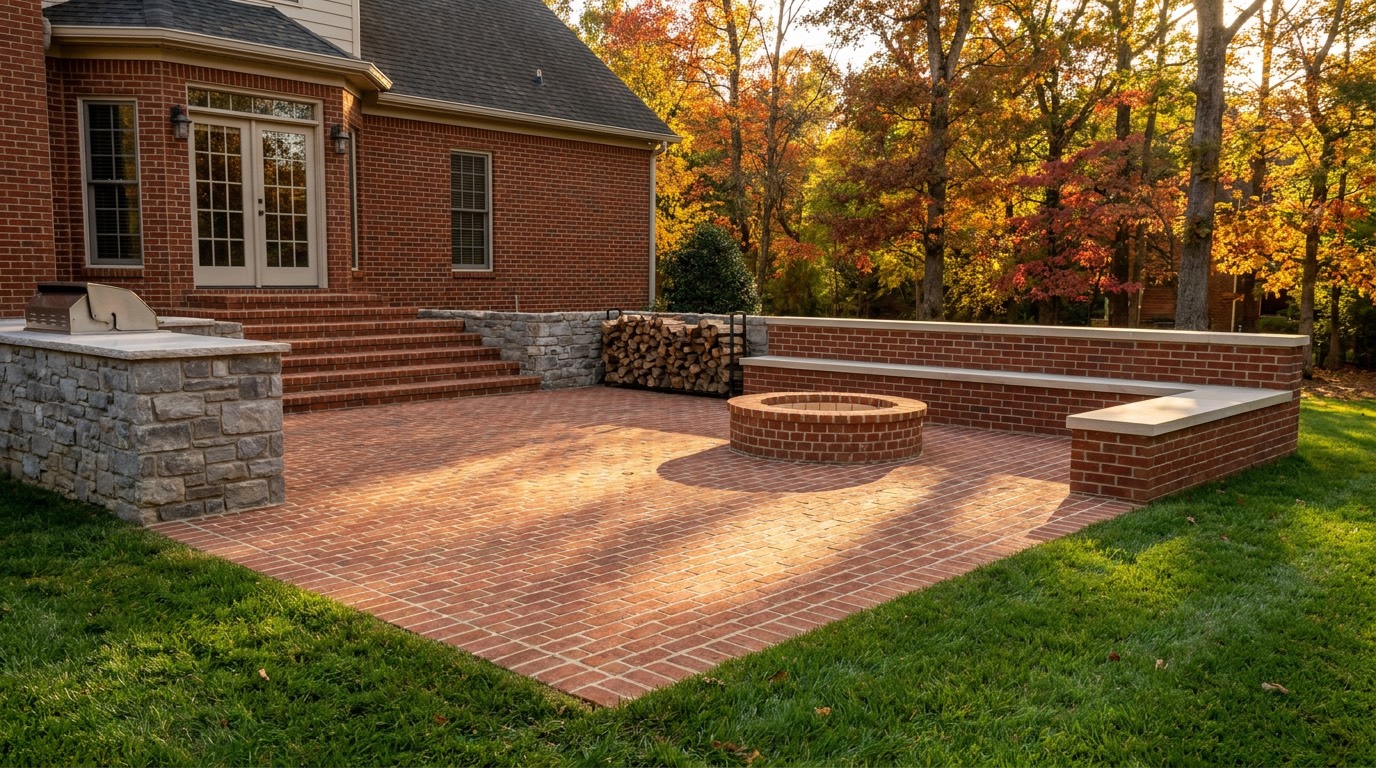 Cost guide
What an Outdoor Fireplace Costs in Murfreesboro
Most of an outdoor fireplace budget sits in three places you cannot see from the finished photo: the footing, the firebox and the chimney height. Here is how those move the number in Rutherford County.
ReadWhat a Pressure Washer Really Does to Brick and Mortar
A rented pressure washer can remove more mortar in ten minutes than weather removes in ten years. The damage is quiet, and it usually shows up the following winter.
Read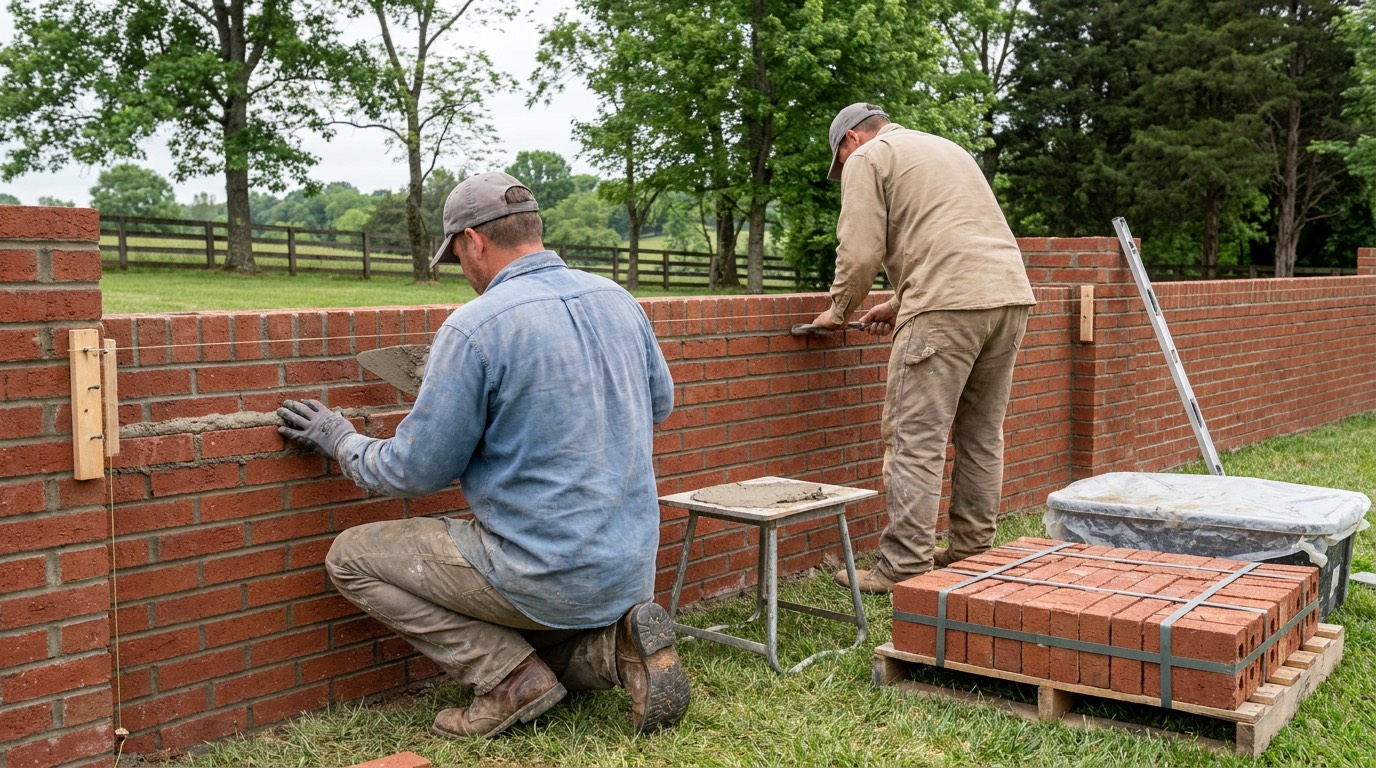 Hiring
Questions That Tell You Whether You Are Talking to a Mason
You do not need to know masonry to hire well. You need six or seven questions and the patience to listen to how somebody answers them.
Read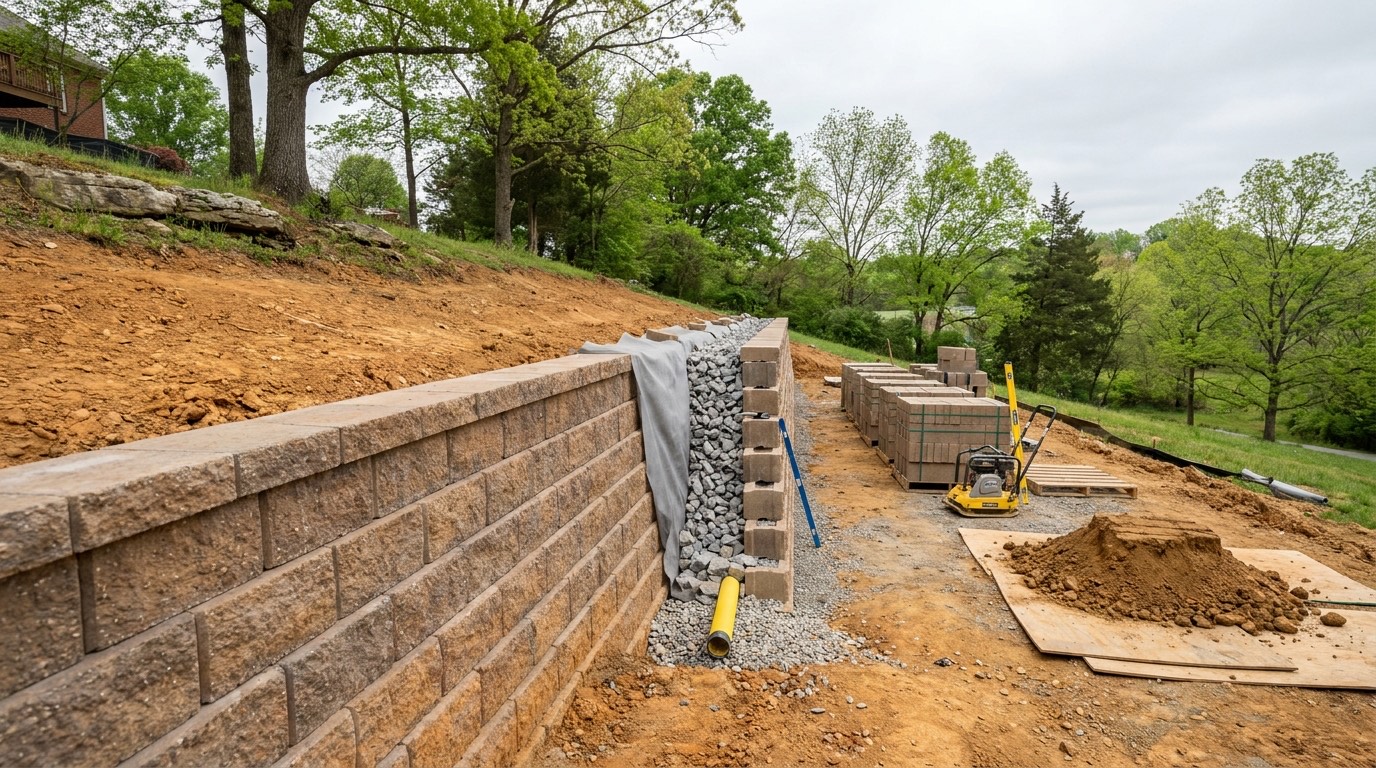 Cost guide
What a Retaining Wall Really Costs in Middle Tennessee
Two walls the same length on the same street can be double each other. Almost all of the difference is buried behind the face, in the base, the backfill and the drainage.
ReadDiagnosisRetaining Wall Failure Signs: Lean, Bulge, Separation and Drainage
A retaining wall gives you months of warning before it goes. Four signs to read, in the order they usually show up on Middle Tennessee clay.
ReadStraight answer on your wall.
Call, or send the form and we will get you a written price.