What a Retaining Wall Really Costs in Middle Tennessee
Two walls the same length on the same street can be double each other. Almost all of the difference is buried behind the face, in the base, the backfill and the drainage.
Why nobody can price a wall over the phone
Retaining walls swing wider than anything else we bid. Two walls of the same length, on the same street, can come in at double each other. The homeowner with the cheaper number is not always the one who got the better deal.
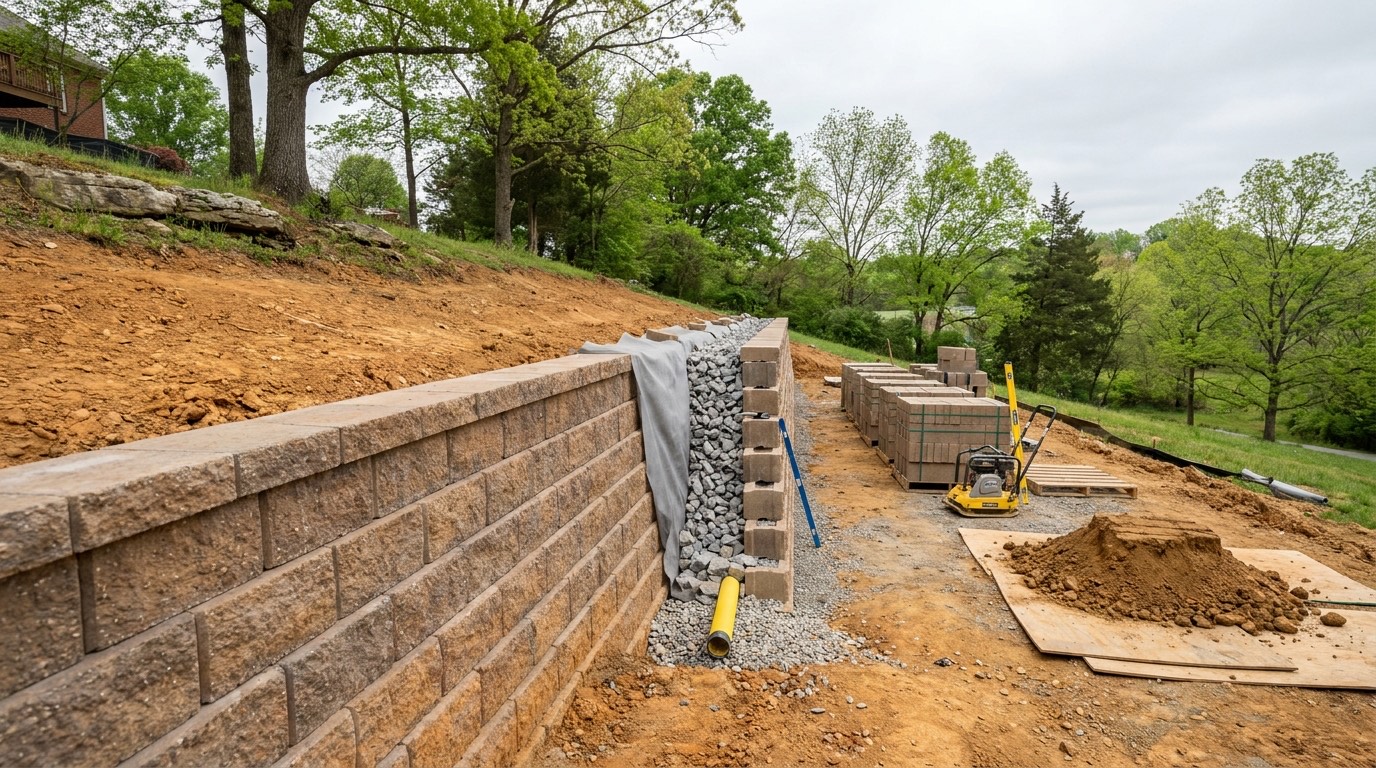
The reason is that most of a retaining wall is buried. You are paying for the base trench, the compacted backfill, the drainage stone and whatever reinforcement holds the hillside back. The face you look at is the last part built and the smallest part of the cost.
So treat the ranges below as budget setting, not as a quote. Only somebody standing on your slope with a shovel, a level and a tape can turn them into a real number.
Height decides how much engineering the wall needs
Height matters more than length. A wall holding two feet of soil is landscaping. A wall holding six feet is a structure, and the load it carries climbs faster than the height does.
Somewhere around four feet, most jurisdictions want a design stamped by a licensed engineer, and the height is usually measured from the bottom of the footing rather than from the grass you are standing on. A wall that looks three feet tall can already be over the line. Confirm the trigger and how it gets measured with the Rutherford County building department before you plan around it. That call is theirs, not ours.
Once a wall crosses into engineered territory, the cost moves in three places at once. The design fee. Geogrid, a reinforcing fabric laid back into the hill in layers, which means excavating well behind the wall face. And a deeper base with a heavier unit.
Want a price for your own wall?
Four quick questions and we come back with a written quote. Or call (772) 251-6654 if that is faster.
Request a quote
Four questions, about a minute. We'll call you back.
What the wall is built from
Materials sort into a few families around here. Segmental concrete block is the workhorse: a dry stacked unit with a lip or pin that sets the batter, quick to build, and what most subdivision walls in Smyrna and La Vergne are made of. The National Concrete Masonry Association publishes the design and installation guidance that whole system is built around, and a contractor working with the product should be able to talk about it.
Mortared natural stone sits at the other end. Tennessee fieldstone on a poured footing belongs on the site, but it is slow work and the labor is where the money goes.
Rough figures per square foot from Middle Tennessee wall builders, before site work and drainage:
- Segmental concrete block, the subdivision workhorse: $15 to $25 per square foot in this area
- Engineered block above four feet: over the plain block range, since a design fee, geogrid and a deeper base all land on the same wall
- Mortared natural stone: $25 to $45 per square foot, and the gap from block is nearly all labor
- Poured stem wall with a stone or brick facing: normally the highest of the three
- Engineer's design, where required: $1,000 to $3,000 as its own line item
Drainage is the part that decides whether it lasts
Nearly every failed wall we get called to look at failed the same way. Water got behind it and nothing let the water out.
Our clay makes that worse than it sounds. Middle Tennessee clay shrinks hard through an August drought and swells again when the spring rain returns. Saturated clay pushes on a wall with far more force than dry soil does, and a wall designed for one and asked to hold the other is on a countdown.
Real drainage means a zone of clean stone behind the full height, filter fabric so silt does not clog it, and a perforated pipe at the base that actually goes somewhere. It costs money and none of it shows. It is also the single line item separating a wall you forget about from one that leans in six years.
- Clean angular drainage stone behind the full height of the wall
- Filter fabric between that stone and the native clay
- A perforated pipe at the base with a real outlet, not a dead end
- Backfill compacted in lifts instead of dumped and walked on
- Grading above the wall that carries surface water away from it
Rutherford County ground: rock in places, clay in the rest
Excavation is where a quote here goes sideways. We sit on limestone, and the depth to that rock can change across one back yard.
Hitting rock in the base trench is not bad news structurally. Rock is an excellent thing to found a wall on. It is bad news for the schedule, because a bucket stops working and a hammer starts, and hammering limestone is slow and gets billed by the hour. That is worth settling before the machine arrives rather than after. A contractor who builds on this ground will tell you how rock gets billed and will write it into the quote instead of mentioning it later.
Karst country supplies the other surprises. Seams, voids and wet weather springs reveal themselves only after the ground is open, and a spring behind a wall changes the drainage design completely. A contractor who bids your slope without asking what the neighbors hit is guessing at your expense.
Access, spoil and the things that quietly add days
After height and drainage, the biggest swing is how easily a machine and a pallet of block reach the work.
A wall along an open driveway is straightforward. The same wall in a fenced back yard on a steep lot, where every unit goes down by hand or by buggy, can carry twice the labor. Older streets near the Murfreesboro square and the tight lots around MTSU rentals are where this bites hardest. Then there is what comes out of the hole. Spread on site, excavated clay is nearly free. Hauled off, it is another line on the invoice.
- Gate width, and whether a machine can reach the work at all
- Turf and slope a tracked machine will tear up and have to restore
- Hauling spoil off site versus spreading it on the lot
- Utility locates, plus irrigation and pet fence lines nobody marked
- Steps, caps, curves and corners, all cut work and all slower than straight run
Turning a range into a number
A site visit exists to answer questions a phone call cannot. How tall is the wall at its worst point, not its average. What is the soil doing after rain. Where does the water go once it leaves the pipe. Is there rock, and at what depth. Can a machine get in.
A quote worth comparing names the unit and the wall type, the exposed height and length, the base depth, the drainage detail, whether an engineer is involved, and what happens to the excavated soil. Two quotes that do not both describe those things are not comparable, however close the totals look. And until somebody has walked your slope, every figure on this page is a budget, not a bid.
Related questions
What does a retaining wall cost per foot around Murfreesboro?
Contractors price by the square foot rather than by the linear foot, because height drives the work far harder than length does. Segmental block runs $15 to $25 per square foot around here, and mortared natural stone runs $25 to $45. Where you land inside either one is set by access, by the drainage detail behind the wall, and by what the excavation turns up.
Do I need a permit or an engineer for a four foot wall?
Quite possibly, and the height is usually measured from the bottom of the footing rather than from grade. That means a wall you think of as three feet may count as more. Ask the Rutherford County building department directly before you design around a number, since the threshold and the measuring method are theirs to define.
Why is the stone wall quote so much higher than the block one?
Labor. Mortared natural stone is placed piece by piece, each one shaped to fit its neighbors, on a poured footing that is its own separate operation. Segmental block is a manufactured unit that stacks fast and holds itself in place. You are buying hours, not stone.
Can a retaining wall be built in winter here?
Dry stacked segmental walls often continue through cold weather, since there is no mortar to protect, though frozen or saturated ground stops excavation and ruins compaction. Mortared stone genuinely stalls, because mortar work stops below roughly forty degrees without cold weather protection. Winter is a good time to get a wall designed.
My old wall is leaning forward. Can it be repaired or does it come down?
It depends on how far it has moved and why. A wall that has tipped slightly because its drainage clogged can sometimes be relieved and partially rebuilt. A wall that has rotated because the base is inadequate, or because saturated clay is leaning on it after a wet Rutherford County spring, usually has to come out. You cannot tell which from the street, and neither can we.
Is a timber wall cheaper than block or stone?
Up front, usually yes. Over a lifetime, rarely. Timber sitting in wet Middle Tennessee clay has a finite life, and replacing a failed timber wall means rebuilding the whole thing rather than repairing part of it. The cheaper option tends to be the one that only gets built once.
More guides
All guides →DiagnosisRetaining Wall Failure Signs: Lean, Bulge, Separation and Drainage
A retaining wall gives you months of warning before it goes. Four signs to read, in the order they usually show up on Middle Tennessee clay.
Read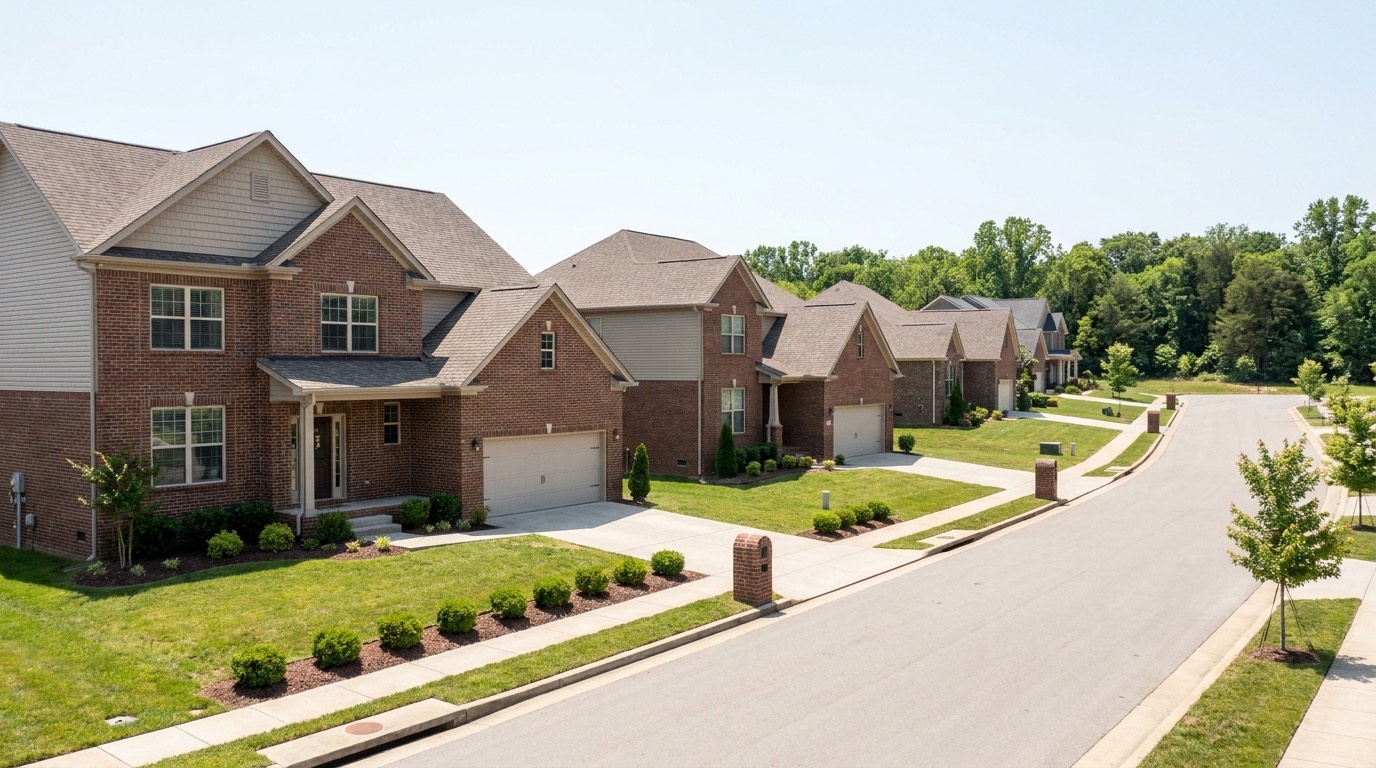 Local guide
Do You Need a Permit for Masonry Work in Rutherford County?
Permits follow structure, not brickwork. Here is how masonry jobs usually get sorted around Rutherford County, and why the only answer that counts comes from the office covering your address.
ReadShould You Seal Your Brick? Usually Not, and Here Is Why
Somebody offered to seal your brick and it sounded like cheap insurance. On most Murfreesboro houses it is the wrong move, and the reason is what winter does to trapped water.
ReadSpalling Brick: Why the Face Pops Off and Spreads
Spalled brick is the face of the unit flaking or popping away, leaving a rough lighter interior exposed. Once it starts on a Middle Tennessee wall it tends to get worse each winter, and the reason is simple physics.
Read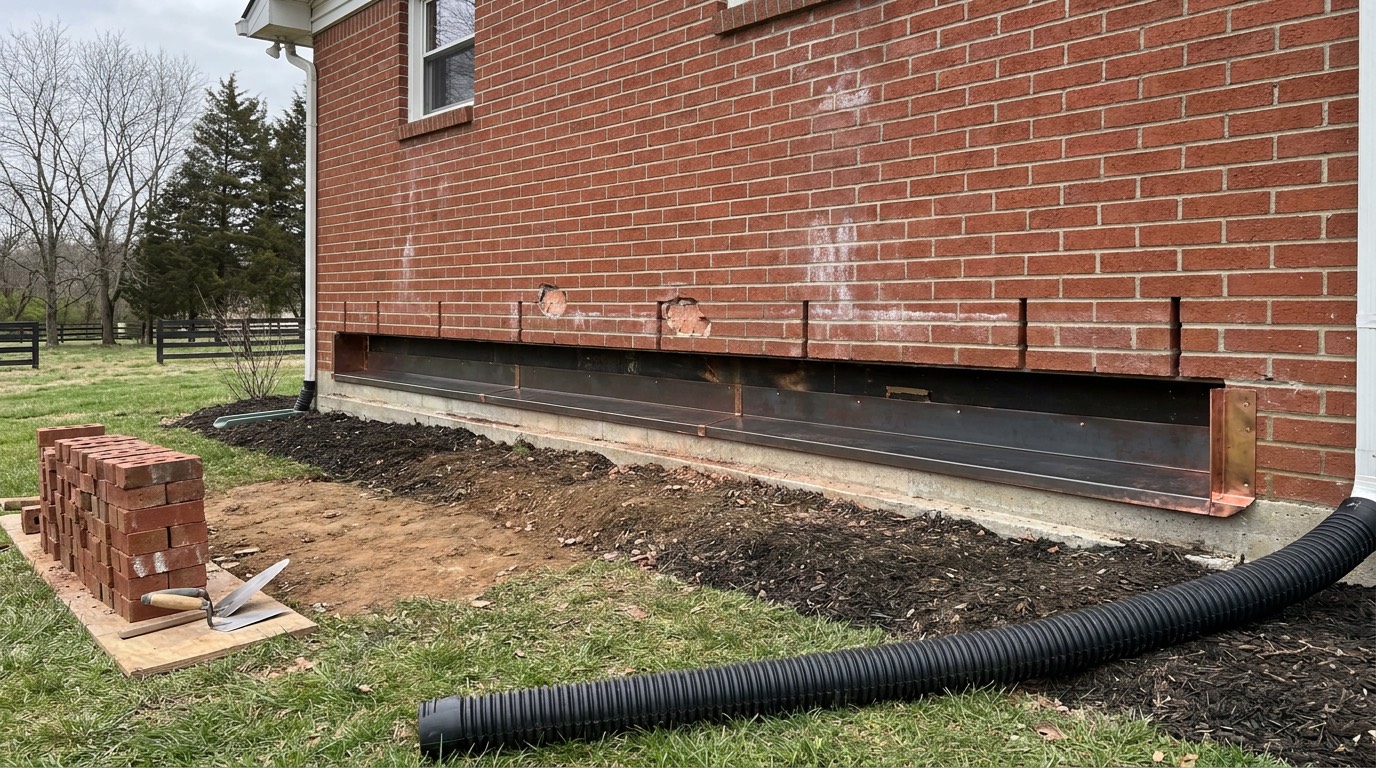 Seasonal
After a Spring Storm: What to Check on Brick and Stone
The damage that matters after a spring storm is rarely the kind you can see from the driveway. It is water that got somewhere it does not normally go.
ReadStraight answer on your wall.
Call, or send the form and we will get you a written price.