Mortar Types N, S and O, and Why Stronger Is Often Wrong
Ask a mason what mortar is going in your wall and the answer should be a letter with a reason attached. If the reason is that it is the strongest available, something is off.
The part that is supposed to lose
Almost everything else in construction is chosen for strength. Mortar is not. It is the deliberately weaker component in a masonry wall, the sacrificial layer that absorbs movement and takes damage so the brick does not have to. That one idea makes the rest of this make sense.
Think about what a wall in Rutherford County goes through in a year. It expands in July and contracts in January. The frame behind it moves. The clay under it swells with spring rain and shrinks in August. Something has to give. If the mortar is softer than the brick, the joint cracks in a hairline you can repoint cheaply. Flip that and the stress goes into the brick, and brick does not repoint.
Where the letters come from
Mortar for unit masonry is covered by ASTM International in the standard usually cited on plans as ASTM C270. It sorts mortar by letter, running strongest to weakest as M, S, N, O and K. The order looks arbitrary until you write MASON WORK and take every other letter, which is how the trade remembers it.
The difference is the proportion of portland cement, lime and sand. More cement means higher compressive strength and less give. More lime means a softer, more workable joint that can heal fine cracks over time as free lime redeposits in them. The strengths run from a couple of thousand pounds per square inch at the top down to a few hundred at the soft end, a wider spread than most homeowners expect.
- Type M: the strongest, for below grade and heavily loaded structural work
- Type S: strong and reasonably flexible, for soil contact and lateral load
- Type N: the general purpose choice for most above grade residential brick
- Type O: soft and low strength, for interior work and soft historic masonry
- Type K: softer again, essentially a preservation mortar for very old fabric
Want a price for your own wall?
Four quick questions and we come back with a written quote. Or call (772) 251-6654 if that is faster.
Request a quote
Four questions, about a minute. We'll call you back.
Type N does most of the work here
For ordinary above grade brick on a house in Murfreesboro, Smyrna or Lebanon, Type N is the default and usually the right answer. It has ample compressive strength for anything a veneer wall asks of it, and enough lime to stay softer than a modern facing brick.
That last part is the point. Modern facing brick specified for freeze exposure is hard and dense. Type N sits comfortably below it, so the hierarchy holds and the joint stays sacrificial. Masons sometimes reach for something stronger on an exposed elevation or a chimney, reasoning that harsher exposure calls for harder mortar. It is an understandable instinct and it is backwards: exposure is exactly where the joint most needs to move.
Where Type S earns its place
Type S is not a tougher Type N for when you want extra insurance. It answers specific conditions, and the thread running through all of them is lateral load or ground contact. Below grade masonry is the clearest case, since soil pushes on it and our clay swells when it takes on water. A retaining wall is that same problem stood up deliberately.
There are edge cases above grade. Freestanding garden walls and tall unbraced parapets take wind on both faces with nothing helping them, and Type S can be the right call. What should not happen is Type S turning up on an ordinary house wall repointing job because it was already in the mixer for the retaining wall out back.
- Foundation and crawlspace walls in contact with soil
- Retaining walls and anything holding back a grade change
- Structural masonry carrying load, rather than veneer carrying itself
- Tall freestanding walls and parapets exposed on both faces
- Paving and horizontal masonry that takes weight and standing water
Type O and the soft brick problem
This is where the letters stop being theory in Murfreesboro. Walk the blocks around the historic square, or the older stretches of Shelbyville and Lebanon, and much of what you are looking at is 19th century brick fired in local kilns at nothing like modern temperatures. It was fired unevenly too, so one wall runs from reasonably hard down to units that crumble under a thumbnail. That brick is soft and porous, and it was never meant to be the strong half of anything.
It was laid in lime mortar with little or no portland cement, far softer than anything mixed on a job today. That mortar was doing its job correctly by staying weaker than the brick, and in many of these buildings it did so for a century and a half. Point that wall with a modern cement rich mix and the hierarchy flips. The joint becomes the hard part, the brick becomes the sacrificial one, and within a few winters faces start coming off in sheets on either side of joints that still look perfect. You cannot repoint a brick.
So the local rule runs on age rather than preference. Prewar brick around the square wants Type O or softer, and genuinely historic fabric may want a lime mortar with no portland in it at all. Postwar ranches and the sixties and seventies rental stock take Type N, as does the newer veneer on the subdivisions out toward Smyrna and La Vergne. The National Park Service covers the historic end of this in its Preservation Briefs series, and the brief on repointing historic masonry is the standard reference.
What too much strength actually does
Watch the failure step by step. A soft brick wall gets repointed with a hard, cement rich mortar. The wall keeps moving, because walls do. The joint no longer yields, so the stress goes into the brick instead.
At the same time the water path changes. Masonry takes on moisture and releases it, and in a properly proportioned wall much of that drying happens through the joints. Seal those with something dense and moisture has to leave through the brick face. Then December arrives, that saturated face freezes overnight, and the outer skin delaminates and drops off. Spalling, in other words, and it is the single most common call we get. Once a face is gone the body behind it drinks faster, so each winter does more than the last.
Matching what is already in the wall
On a repair the mortar is chosen to fit what is standing, and the order of priority is strength, then sand, then color, then joint profile. Homeowners usually arrive with that list upside down, because color is the part visible from the driveway.
A competent mason scratches the existing joint, watches how it breaks, judges how hard the brick is, then specifies something softer. On genuinely old work, lab analysis of a small sample costs little against getting it wrong across a whole facade. Sand is the sleeper item, since most of a joint by volume is sand and matching it does more for appearance than any pigment. Tooling matters too, because a differently profiled joint reads as a repair from the street even when the color is right. Ask for a sample panel somewhere inconspicuous and look at it dry, in daylight.
Related questions
How do I find out what mortar is in my wall now?
Start with the age of the building. Around Murfreesboro that sorts most walls quickly: prewar brick is usually lime based and soft, postwar ranches and seventies rentals sit in the middle, and anything veneered since the nineties is hard. Then scratch a joint somewhere out of the way. Mortar that powders under a key is soft, mortar that turns a steel point is cement rich. On an important old building, lab analysis settles it.
Is Type S ever right for repointing a house wall?
Sometimes, but it needs a reason beyond wanting a durable job. Below grade sections, retaining walls and tall exposed freestanding walls can justify it. For standard above grade veneer here, Type N is normally correct, and a contractor reaching for Type S everywhere is not matching the mortar to the wall.
Can I use bagged mortar from a home center?
Preblended bagged mortars are made to the recognized types, so the bag is not the problem. Which bag is. Read the label for the type letter rather than assuming, and note that some general purpose repair products are not specified masonry mortar at all. The yards around Rutherford County shelve Type N and Type S. Type O and the lime rich blends are a special order, so identify the wall before the weekend it gets repointed.
Will new mortar match the old joints exactly?
Not on day one, and anyone promising that is overselling. New mortar cures light and darkens over a year or two, while the old joints carry decades of weathering. Matching sand and tooling gets you most of the way. Expect the repair to show at first and blend gradually.
Does mortar type matter on a small patch?
Just as much. The wrong mortar in a small area concentrates stress exactly where it was placed, and a hard patch in a soft wall damages the brick around it while looking fine itself. The temptation to grab whatever is on hand is higher on small work, which is why small repairs come back.
Does cold weather change which mortar gets used?
No, and the urge to pick something stronger for winter is the mistake this whole article is about. The wall chooses the letter. Weather only changes the handling. What cold changes is time. Curing slows as the temperature falls and stops being dependable below roughly forty degrees, which in Middle Tennessee rules out much of December through February without heated materials and an enclosure. A joint caught by a hard freeze before it has set up is ruined whatever letter was on the bag, and the lime rich types gain strength slowest, so a soft old wall needs a longer protected cure rather than more cement.
References
Standards bodies and agencies referenced above. We are not affiliated with them.
More guides
All guides →Brick Maintenance on MTSU Area Rentals: A Landlord's Working List
Rental brick near campus fails in a predictable order, and almost all of it starts with water that was never managed. Here is how to triage it across a portfolio.
Read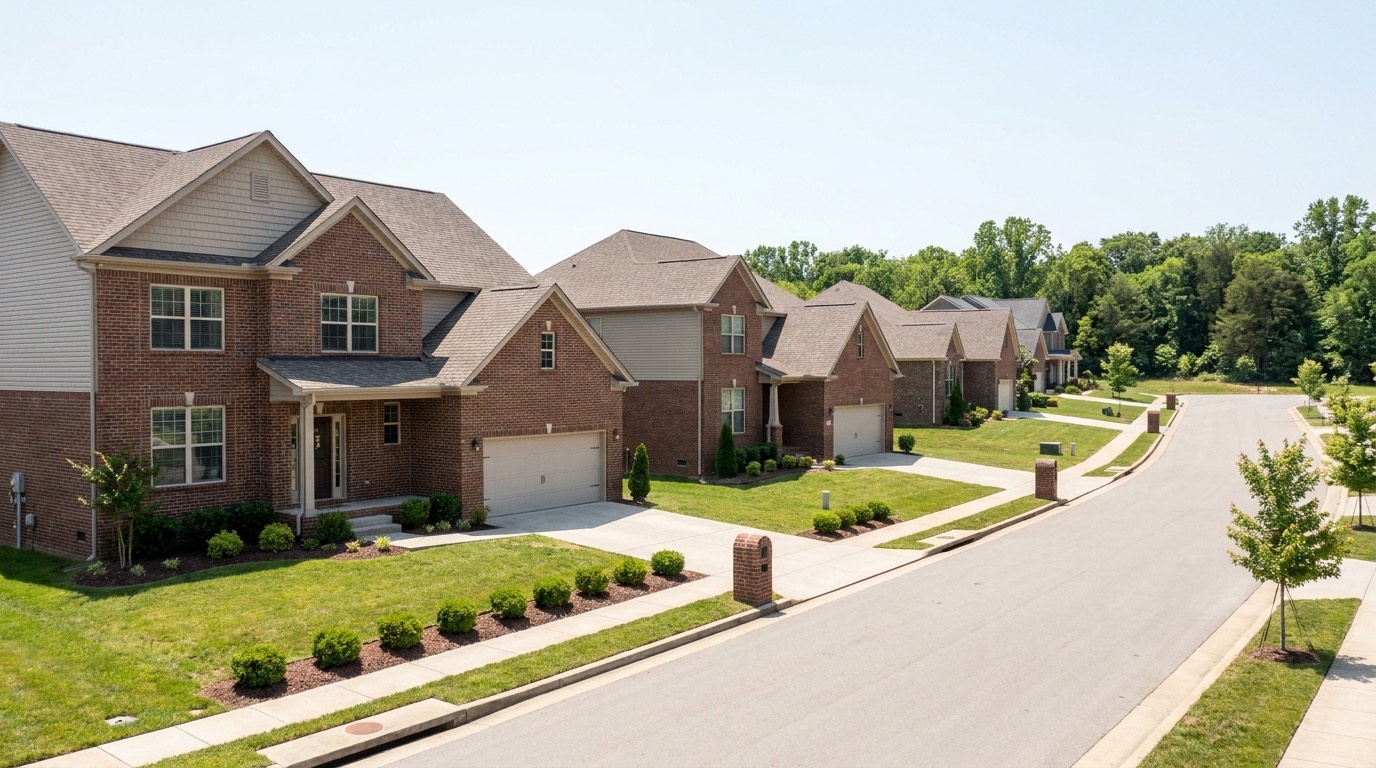 Local guide
What to Watch on New Brick Veneer in Smyrna and La Vergne
A ten year old subdivision house is not old. It is just old enough for the details behind the brick to start reporting on how carefully they were built.
Read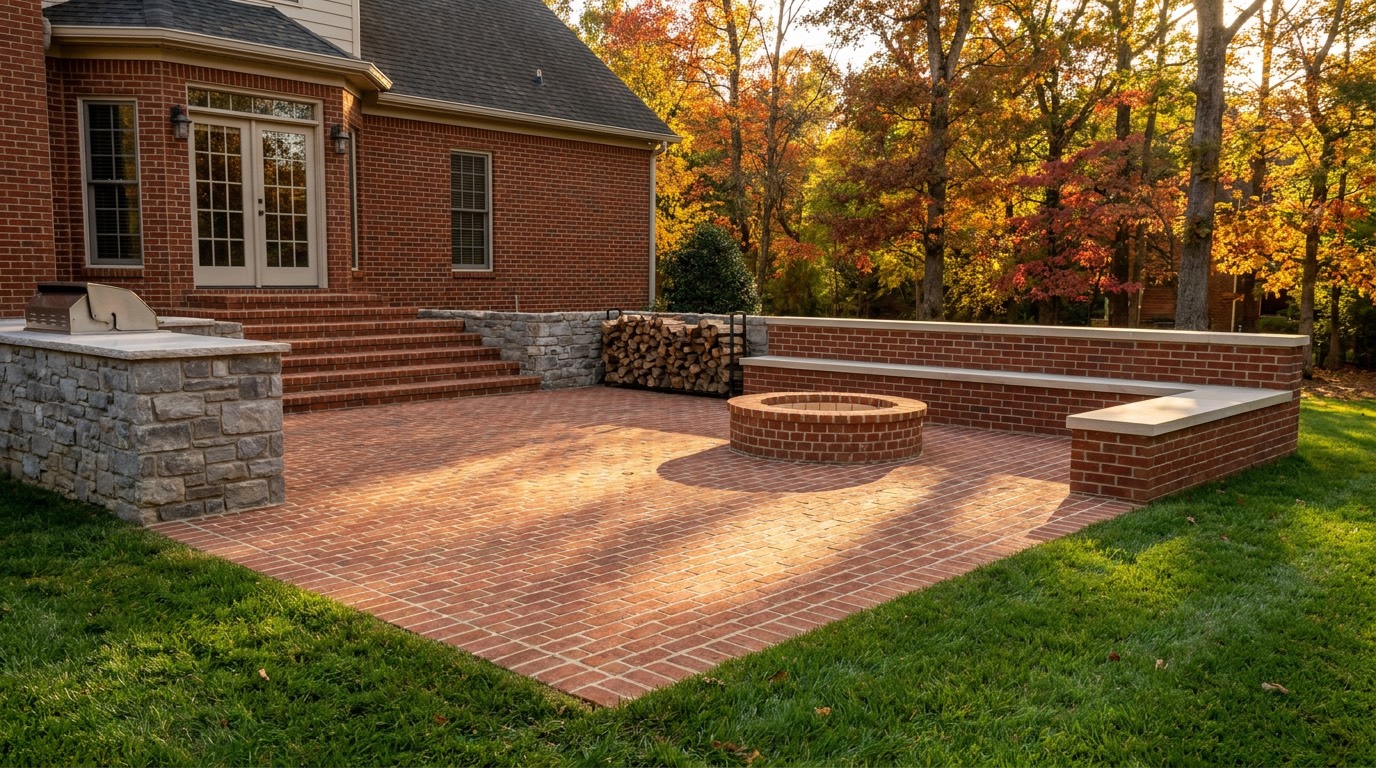 Cost guide
What an Outdoor Fireplace Costs in Murfreesboro
Most of an outdoor fireplace budget sits in three places you cannot see from the finished photo: the footing, the firebox and the chimney height. Here is how those move the number in Rutherford County.
ReadWhat a Pressure Washer Really Does to Brick and Mortar
A rented pressure washer can remove more mortar in ten minutes than weather removes in ten years. The damage is quiet, and it usually shows up the following winter.
Read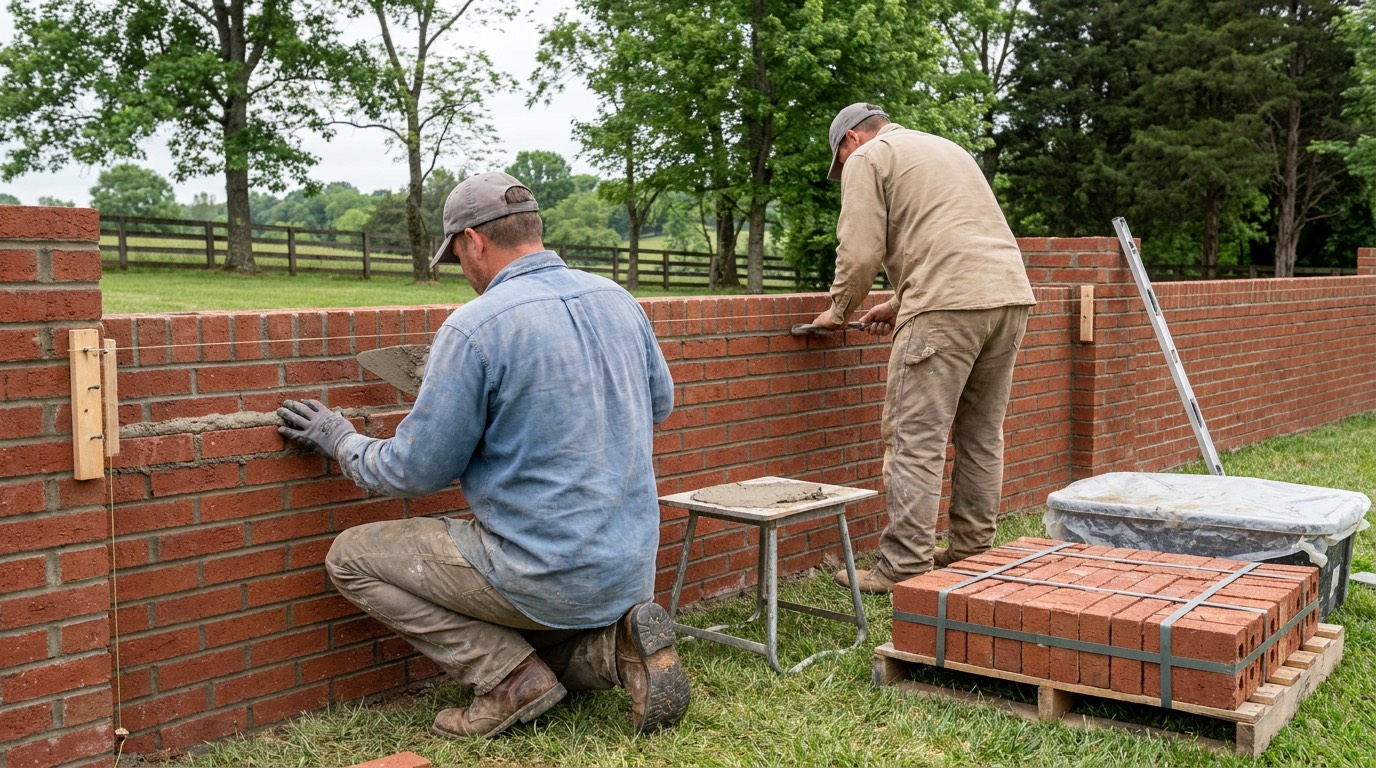 Hiring
Questions That Tell You Whether You Are Talking to a Mason
You do not need to know masonry to hire well. You need six or seven questions and the patience to listen to how somebody answers them.
ReadStraight answer on your wall.
Call, or send the form and we will get you a written price.