Tennessee Licensing and Masonry Work: What It Covers and What It Does Not
Nobody in Tennessee holds a license that says mason on it. Knowing what the state license does cover, and what it never covers, changes the questions you ask.
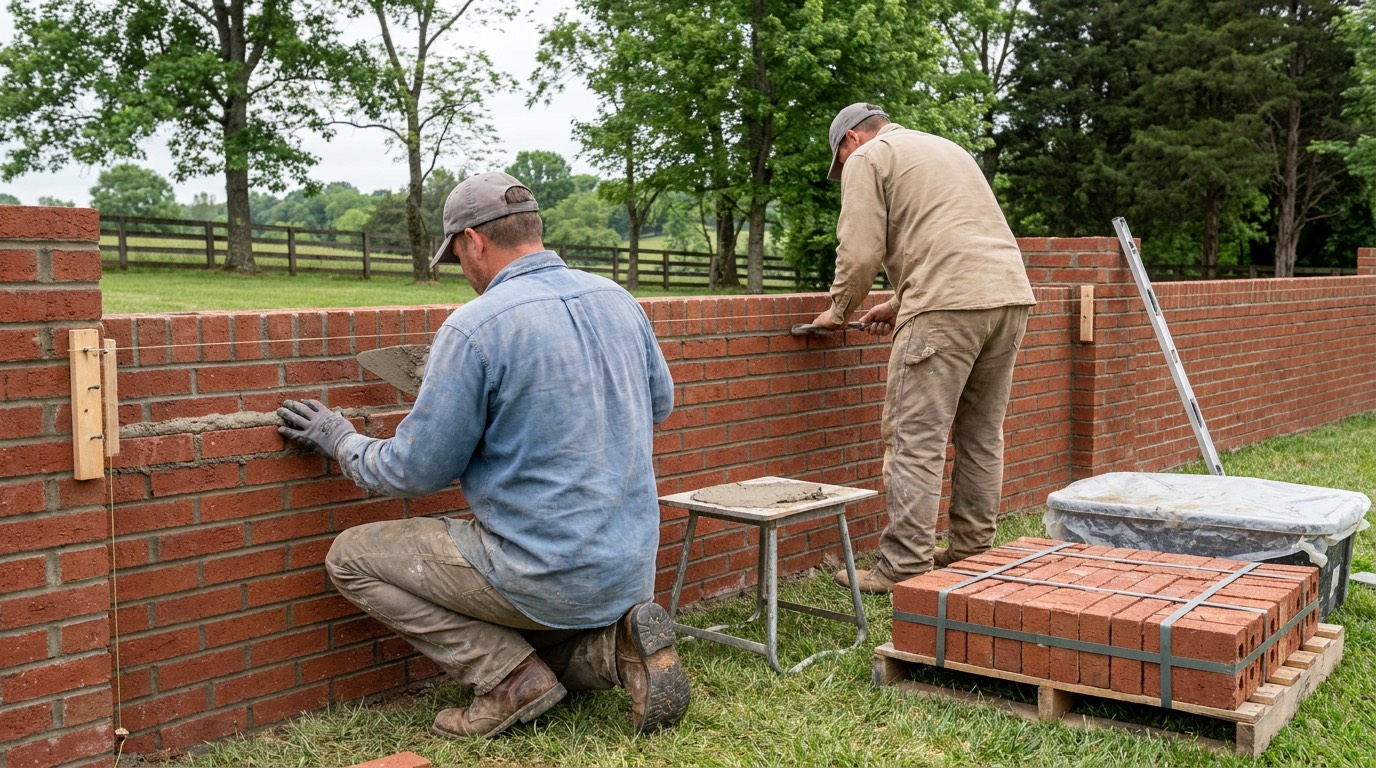
There is no masonry license in Tennessee
Start here, because it saves a lot of confusion. Tennessee does not issue a trade license for masons. Nobody is going to hand you a card that says licensed brick mason, and anyone implying the state tested their ability to lay brick is describing something that does not exist.
What does exist is a contractor license administered by the Tennessee Board for Licensing Contractors. It is not organized by trade skill. It is organized by the size and type of the job.
What the Board actually licenses
A state contractor license is issued to a person or a company, in a specific classification, with a monetary limit attached. What an applicant has to satisfy before the Board hands one over is the Board's own process, it gets revised, and it is worth asking them about directly rather than working from a summary written somewhere else.
The trigger for needing one is the value of the project rather than what the work is. Above a dollar threshold set by the state, the contractor must be licensed. Below it, licensing may not apply the same way.
That threshold is a number, it has changed over the years, and it is not something to take from a web page including this one. Confirm the current figure and the current rules with the Tennessee Board for Licensing Contractors before you rely on either. The monetary limit is worth understanding too: a license carries a ceiling, so a contractor can be properly licensed and still not be licensed for the size of your project.
Want a price for your own wall?
Four quick questions and we come back with a written quote. Or call (772) 251-6654 if that is faster.
Request a quote
Four questions, about a minute. We'll call you back.
What a license proves and what it does not
A license is genuinely useful information. It tells you the business cleared whatever the state asks of applicants, that there is a public record attached to a real legal entity, and that there is a complaint channel if things go badly. It also tells you the business has existed long enough and in enough order to get through that process.
It does not tell you the person can point a wall. It says nothing about whether they have ever worked on soft nineteenth century brick, whether they can match a mortar color, or whether they understand why a hard mix destroys an old wall. It does not promise the crew showing up at your house works for the license holder.
Treat it as a floor, not a recommendation. Skill gets verified separately, by looking at completed work of the same type and by how somebody answers technical questions.
Insurance is the thing people confuse it with
Ask a homeowner whether their contractor is licensed and insured and it usually comes as one phrase. They are unrelated. The state license is a qualification. Insurance is a financial backstop, and for masonry it is the one you actually feel if something goes wrong.
Two policies matter. General liability covers damage to your property, which on a masonry job means the brick, the windows, the landscaping, the vehicle parked beside the scaffold. Workers compensation covers injury to the crew. Masonry involves height, scaffold, roofs, heavy material and grinders, and an uninsured injury on your property is a problem you do not want to discover afterwards.
Ask for the certificate of insurance to come directly from the agent or insurer, with your name listed as certificate holder. A PDF forwarded by the contractor tells you the policy existed on the day it was issued and nothing about today.
- General liability, current, sent by the agent not the contractor
- Workers compensation covering everyone who will be on site
- Your name and property address as certificate holder
- Coverage dates that run past your expected completion
- Confirmation of whether subcontractors carry their own
Local registration and permits sit on top
State licensing is one layer. Local requirements are another, and they are separate questions with separate answers depending on the address.
The City of Murfreesboro and Rutherford County each have their own business tax registration and their own permitting processes, and Smyrna and La Vergne are their own jurisdictions again. Whether your particular job needs a permit depends on what it is. A chimney rebuild, a structural repair or a retaining wall over a certain height are different questions from repointing a garden wall.
Do not take that from a contractor's assurance and do not take it from here. Call the building department for the jurisdiction the property sits in and ask about your specific scope. It is a short call, it is free, and a contractor who discourages you from making it has told you something.
Verifying before you sign, not after
The Board publishes a license search. Use it, and use it properly, because the common failure is not a fake license. It is a real license that does not belong to the entity you are about to pay.
Get the license number in writing. Check the exact legal name on the license against the name on the contract, the name on the invoice and the name you are writing the check to. If those three do not match, stop and ask why before anything else happens. Check the status is active, check the expiry date, and check the classification and monetary limit make sense for your job.
Then do the ordinary work that no license replaces. Ask to see brick repairs they finished two or three years ago rather than last month, because masonry looks fine on the day it is done. Ask for references on jobs like yours. On old brick, ask specifically what mortar they would use and why.
A written scope does more for you than the license
In practice, most disputes on masonry jobs are not about credentials. They are about what was supposed to happen, and they occur because nobody wrote it down.
A scope worth signing names the elevations and areas covered, states the mortar type and how it was selected, gives the depth joints will be cut to, describes the tooling profile, and says how the work will be accessed. It covers protection of the ground and the plantings, dust control, cleanup and final wash down. It sets a payment schedule tied to milestones rather than a large sum up front, and it says what happens to the schedule when the weather goes below working temperature.
A license lets you find somebody afterwards. A written scope means you probably will not need to.
Related questions
Does a mason need a state license for a small repair?
It depends on the value of the project, since the requirement is triggered by a dollar threshold rather than by the trade. Confirm the current figure with the Tennessee Board for Licensing Contractors. A mason who cannot tell you roughly where that line sits has told you something about how he runs the business.
Is a business license the same as a contractor license?
No. A business tax registration is a local matter, and around here that means the City of Murfreesboro, Rutherford County, or Smyrna and La Vergne if the job sits in one of those, each with its own paperwork. It mostly says the business is registered to operate and pay tax there. The state contractor license is a separate qualification, issued in a classification and carrying a monetary limit. Neither one covers the other.
What about a home improvement license?
Tennessee does have a home improvement contractor license, and it applies in certain counties rather than across the whole state. Because it is drawn county by county, the answer for a job in Murfreesboro can differ from the answer for the same job in Franklin. Whether it reaches your address and your scope is a question for the Board rather than for a blog post. Ask them directly.
Is it ever reasonable to hire an unlicensed mason?
If the project genuinely falls below the threshold, an unlicensed contractor is not automatically doing anything wrong. Insurance is the part that stays non-negotiable at every size. A small job with no workers compensation on a two story wall is still a real risk to you.
My contractor's license expired partway through the job. Now what?
Raise it in writing straight away and check the record yourself rather than accepting a verbal explanation. Renewals do lapse for administrative reasons. Pause the next payment milestone until the status is clear, and keep the correspondence.
Where do complaints go if something goes wrong?
The Board takes complaints against licensed contractors, which is one of the practical reasons licensing is worth checking up front. Your written contract, the quote, photographs and the payment record are what make a complaint useful. With unlicensed work, the options are narrower and slower.
More guides
All guides → Local guide
Tennessee Fieldstone or Shipped In Stone: Choosing for a House Here
The stone that comes off a Rutherford County fencerow and the stone on a pallet from three states away behave differently on a wall. Both have their place. Here is how to pick.
ReadWhat Tuckpointing Costs in Rutherford County, and What Moves the Number
Two brick walls the same size can hold very different amounts of mortar joint, which is why the same square foot of wall is not the same amount of work.
ReadWater in a Basement Block Wall: Fix the Outside First
Most wet block walls are fixed in the yard, not the basement. Here is how to read what the wall is telling you, and the outside work that belongs before any coating goes on.
ReadWeep Holes: Why Your Brick Wall Is Built to Drain
Every year somebody caulks the gaps along the bottom of their brick to keep bugs out. It works on the bugs. It also traps water in a wall built on the assumption that water gets out.
ReadHiringWhat Belongs in a Masonry Quote Around Murfreesboro
A masonry quote is really a specification, and the price is only the last line of it. When the specification runs one sentence long, there is nothing there to compare.
ReadStraight answer on your wall.
Call, or send the form and we will get you a written price.